-
Showing posts with label Alabama. Show all posts
Showing posts with label Alabama. Show all posts
Monday, June 26, 2017
Monday Music: White Man's World (Jason Isbell)
Jason Isbell is on the rise as a significant voice in in today's music milieu. He is a popular musician who who sings and writes in the folk tradition. Reminiscent of a young Bob Dylan or a Bruce Springsteen, this artist from Florence, Alabama is one to watch.


Wednesday, August 17, 2016
Flashback: Moving Toward the Common Good, or Slouching Toward Dystopia?
[While I am working on another project, I am re-posting some of my favorite essays. This post originally appeared on March 25, 2011]
~William Blake (from "Jerusalem")
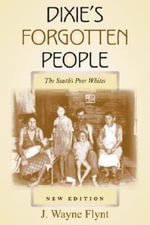 In Wayne Flynt’s Dixie’s Forgotten People: the South’s Poor Whites, he offers a clear picture while providing some understanding of the poor white culture that has been marginalized from mainstream society in the South. Describing something like a caste system in the South, Flynt portrays the historical and sociological developments that contributed to their plight. While agriculture was dominant in the earliest days of the English and Scots-Irish settlers, beginning in the latter half of the 19th century, the textile industry did much to shape southern life. At one point Flynt quotes from The Wasted Land, by Gerald Johnson to show that the textile industry in the South was as much a social endeavor as it was a commercial enterprise. The South offered cheap labor for the textile industry as it moved from the Northeastern factory establishments. There were some textile entrepreneurs who hoped to revitalize the decaying and gloomy prospects of the lower class whites of the South.
Southern Mill Towns
 Textiles, poverty, and the South all strike a deep chord with me. I grew up in Alabama’s Tallapoosa County. My home was in Jackson’s Gap before the family moved into the metropolis of Dadeville (population 3,000). Many of my school classmates came from mill working families. Russell Mills, later to become the Russell Corporation, was perhaps the largest employer of the area. They were located in the neighboring town of Alexander City, along with another large textile manufacturer, Avondale Mills. Down the road in the other direction was another large employer of unskilled labor, Pepperell Mills in Opelika. In addition to these large industrial giants there were many smaller textile mills in the area. Indeed, from one county to the next, small villages and valleys were scattered with numerous small textile plants, each specializing in a particular product.
There were no unions in our area. Mill owners were known to make benevolent contributions to the community in the building of a school or a hospital or other community improvements. They provided employment for countless citizens, but never any guarantees. Alabama was (and still is) an “at will” state, which means that employees are hired at the will of the employer and can at any time be terminated if the employer has no further need of the employee’s services. If you saw the movie, Norma Rae, you saw something of the milieu of my childhood and the people I knew growing up. [That movie was filmed in Opelika, used many locals as extras, and the producers were very happy to find a mill in place that so perfectly fit with the story they wanted to tell – I’m not sure the mill operators realized what story the film was telling.]
Beginning in the 1860’s, the textile industry brought scores of people off the farm and into the towns and cities. Millwork was hard and tedious, but it offered a steady income that was more reliable than farming for the landless poor. When I was coming of age, I had classmates who were looking ahead to a life in the mills. Some quit school at age 16 to work in the mill, some began working after graduation from high school, glad to have a job that required no further education. There were others of us who had no desire for the routine grind of unskilled labor and we set our sights on life beyond the textile valleys of home. Some of us opted for college as a stepping stone, others gravitated to the military, but none of us ever imagined that the huge textile industry that surrounded us would not always be there for generation after generation.
.jpg) Though mill work was not what I envisioned for myself, I looked around at the community and saw that the mills gave many people meaningful, productive work. They were able to have a roof over their heads, provide for their families, go to the ball game on Friday nights, and take time off to go fishing on the lake. Indeed, the mill was an integral part of southern life in three productive shifts. There were churches and schools that for all practical purposes served as adjuncts to life in the mills. I knew from talking to my classmates that at Russell Mills, you got a paid day off on your birthday, and after 25 years, you got a watch at the annual company picnic. Then when the Russell Corporation gained national prominence as the manufacturer of uniforms for the major sports teams, it became a source of pride for everyone in the community. But with no unions, there were no guarantees, other than the seemingly endless grind of the textile machinery that would always be in need of workers.
Though mill work was not what I envisioned for myself, I looked around at the community and saw that the mills gave many people meaningful, productive work. They were able to have a roof over their heads, provide for their families, go to the ball game on Friday nights, and take time off to go fishing on the lake. Indeed, the mill was an integral part of southern life in three productive shifts. There were churches and schools that for all practical purposes served as adjuncts to life in the mills. I knew from talking to my classmates that at Russell Mills, you got a paid day off on your birthday, and after 25 years, you got a watch at the annual company picnic. Then when the Russell Corporation gained national prominence as the manufacturer of uniforms for the major sports teams, it became a source of pride for everyone in the community. But with no unions, there were no guarantees, other than the seemingly endless grind of the textile machinery that would always be in need of workers.
Capitalism Without Conscience
Then the unforeseen happened - the mighty spindles came to a stop. Mills that had been run by local families who had some connection and investment in the local community began to see stiffer competition in the global market. Warren Buffet’s conglomerate bought out The Russell Corporation and moved much of the production to Central America where unskilled labor was much cheaper than in Alabama. Avondale Mills went belly up trying to compete – they were bought out by another company which managed to keep 200 jobs in the community. Employment opportunities quickly drained, not only from Tallapoosa County, but from the surrounding counties as well. The Pepperell Manufacturing Company which had flourished in Opelika closed its doors in 2006. People with no specialized training or education were left with little opportunity. Mill work may have been bleak and mindless, but joblessness takes a much greater toll on the soul.
In my mind, what my hometown and the surrounding area witnessed was capitalism without conscience. In the past, wealthy mill owners at least felt some obligation to the community. Now the large conglomerates had no human face and no interest in the local community. They could pull up stakes and move to wherever they needed in order to increase profits, with no apparent remorse over the wounds left in the local community.
Perhaps what we experienced was what happened in the Northeast when the industry came South in search of cheap labor. At any rate, I can see a few lessons to be learned in the aftermath. One, it is shortsighted to attract industry with promises of cheap labor while doing precious little to educate and equip the citizens who will be the workforce. Two, companies will only heed the needs of the workers out of necessity – hence the need for workers to have a voice and some ability to broker terms with company management. A third lesson might be that perhaps we need more diversity in employment options - more small enterprises rather than one huge industry.These are lessons that my state seems still unwilling to consider. Alabama cheered when it attracted Mercedes, Honda, Hyundai and Toyota to build in the state, but is this not yet another example our state being at the mercy of large industries ever migrating from one labor source in search of cheaper wages?
Not Just a Regional Phenomenon
We are making and producing less and less, not just in the South, but throughout the United States. Remember when Walmart boasted “Made in America?” When was the last time you saw that slogan painted across a Walmart delivery truck? When my hometown saw The Russell Corporation shifting its workforce to the sweatshops of Honduras, the same thing was happening throughout the country. Manufacturing was leaving, moving to third world countries where goods could be manufactured for less money to bring companies and shareholders higher profits. Most of the U.S. population, while they may have wanted industries to stay, seemed perfectly willing to accept lower prices at the checkout line as a fair outcome. We heard no great unified protest from the public as individuals and communities throughout the South as well as across the heartland of America struggled with job losses and "vocational retraining" in the absence of real jobs.
Where Do We Go From Here?
I see many questions at hand. How are we doing? What are our prospects for the future? Do we have a citizenry equipped to contribute to the well being and the common good of the community? Are we training the next generation to be vocationally adept so that they can provide for themselves and contribute to the community? Will we start making things again? Will business and industry have any investment in the local community? Will what happens in my community (and in your community) ever be as important as profits for the huge corporations that our polititians remind us we need in order to have jobs? Will company bosses ever again feel any compunction to give back to the community? Will the U.S. worker be once again marginalized as has been the lot of so many working poor in the South throughout its history?
Unfortunately, for too long it has benefited society to have a readily available workforce that is poor and needy, and therefore willing to accept whatever menial labor we need done, at the lowest wage possible. We will placate the low wage earner from time to time with some token benefit: a gift watch here, a day off there, a Christmas bonus and a pat on the back. As long as society at large benefits from a permanent underclass we will always have the poor with us. Once they were in tenant farm shacks, then in mill villages and mining camps. Now we find them in urban housing projects, rural trailer parks, and rental housing with many falling prey to cheap whiskey, meth, and cable TV to pass the time in the absence of meaningful work.
I have hope for humanity because we carry with us the aspirations for justice, freedom and peace. We also carry with us a penchant for war, greed and oppression. Rabbi Zalman Schacter-Shalomi says that "There is more good than evil in the world—but not by much." It is that little bit more that can lead us to a better world. Will we find a way to move toward the common good, or will we continue to slouch toward the dystopia which George Orwell, Aldous Huxley and others have warned us of?
~ Charles Kinnaird
An added note: I would be remiss not to include a comment from a reader when this essay was first posted. She shares from her own experience and corrects some of my account of Russell Mills recent history:
Thank you for writing this. I, too, have a history that is heavily tied to textile mills in Alabama. My great-great grandfather, great-grandmother, great-grandfather, grandmother and grandfather all worked at the West Point mills in Langdale and West Point. I was also one of the first employees hired in Atlanta, when Russell moved most of their corporate offices.

This photograph, taken by a photographer from the U.S. Department of Agriculture, shows a female employee tending the machines spinning cotton thread at the Pepperell Manufacturing Company textile mill in Lee County, Ala.
-- From Howard Washington Odum Papers (#3167), Southern Historical Collection, University of North Carolina at Chapel Hill.

Avondale Mills, a textile plant, was a longtime employer in Alexander City until the company folded in 2006. Parkdale Mills purchased the plant, averting the loss of about 200 jobs.
This photo is from an insightful article, "The Legacy of a Cotton Culture," by Larry Lee, director of the Center for Rural Alabama

“There Is Such A Thing As Rural Development,” by Larry Lee. The Daily Yonder, April 9, 2010. Online at http://www.dailyyonder.com/rural-and-development-can-get-along/2010/04/08/2682
“17 Rules for a Sustainable Local Community,” by Wendell Berry, online at
http://sustainabletraditions.com/2010/10/wendell-berry-17-rules-for-a-sustainable-local-community/#
Dixie’s Forgotten People: The South’s Poor Whites, by Wayne Flynt, Indiana University Press; New Edition (October 19, 2004)
Poor but Proud: Alabama's Poor Whites, by Wayne Flynt, University Alabama Press (November 8, 2001).
All Over But the Shoutin’, by Rick Bragg, Vintage (September 8, 1998).
And was Jerusalem builded here,
Among these dark Satanic Mills?
Among these dark Satanic Mills?
~William Blake (from "Jerusalem")
[This is my second essay inspired by reading Wayne Flynt's book. The first essay can be found here.]
Southern Mill Towns

There were no unions in our area. Mill owners were known to make benevolent contributions to the community in the building of a school or a hospital or other community improvements. They provided employment for countless citizens, but never any guarantees. Alabama was (and still is) an “at will” state, which means that employees are hired at the will of the employer and can at any time be terminated if the employer has no further need of the employee’s services. If you saw the movie, Norma Rae, you saw something of the milieu of my childhood and the people I knew growing up. [That movie was filmed in Opelika, used many locals as extras, and the producers were very happy to find a mill in place that so perfectly fit with the story they wanted to tell – I’m not sure the mill operators realized what story the film was telling.]
Beginning in the 1860’s, the textile industry brought scores of people off the farm and into the towns and cities. Millwork was hard and tedious, but it offered a steady income that was more reliable than farming for the landless poor. When I was coming of age, I had classmates who were looking ahead to a life in the mills. Some quit school at age 16 to work in the mill, some began working after graduation from high school, glad to have a job that required no further education. There were others of us who had no desire for the routine grind of unskilled labor and we set our sights on life beyond the textile valleys of home. Some of us opted for college as a stepping stone, others gravitated to the military, but none of us ever imagined that the huge textile industry that surrounded us would not always be there for generation after generation.
.jpg) Though mill work was not what I envisioned for myself, I looked around at the community and saw that the mills gave many people meaningful, productive work. They were able to have a roof over their heads, provide for their families, go to the ball game on Friday nights, and take time off to go fishing on the lake. Indeed, the mill was an integral part of southern life in three productive shifts. There were churches and schools that for all practical purposes served as adjuncts to life in the mills. I knew from talking to my classmates that at Russell Mills, you got a paid day off on your birthday, and after 25 years, you got a watch at the annual company picnic. Then when the Russell Corporation gained national prominence as the manufacturer of uniforms for the major sports teams, it became a source of pride for everyone in the community. But with no unions, there were no guarantees, other than the seemingly endless grind of the textile machinery that would always be in need of workers.
Though mill work was not what I envisioned for myself, I looked around at the community and saw that the mills gave many people meaningful, productive work. They were able to have a roof over their heads, provide for their families, go to the ball game on Friday nights, and take time off to go fishing on the lake. Indeed, the mill was an integral part of southern life in three productive shifts. There were churches and schools that for all practical purposes served as adjuncts to life in the mills. I knew from talking to my classmates that at Russell Mills, you got a paid day off on your birthday, and after 25 years, you got a watch at the annual company picnic. Then when the Russell Corporation gained national prominence as the manufacturer of uniforms for the major sports teams, it became a source of pride for everyone in the community. But with no unions, there were no guarantees, other than the seemingly endless grind of the textile machinery that would always be in need of workers.Capitalism Without Conscience
Then the unforeseen happened - the mighty spindles came to a stop. Mills that had been run by local families who had some connection and investment in the local community began to see stiffer competition in the global market. Warren Buffet’s conglomerate bought out The Russell Corporation and moved much of the production to Central America where unskilled labor was much cheaper than in Alabama. Avondale Mills went belly up trying to compete – they were bought out by another company which managed to keep 200 jobs in the community. Employment opportunities quickly drained, not only from Tallapoosa County, but from the surrounding counties as well. The Pepperell Manufacturing Company which had flourished in Opelika closed its doors in 2006. People with no specialized training or education were left with little opportunity. Mill work may have been bleak and mindless, but joblessness takes a much greater toll on the soul.
In my mind, what my hometown and the surrounding area witnessed was capitalism without conscience. In the past, wealthy mill owners at least felt some obligation to the community. Now the large conglomerates had no human face and no interest in the local community. They could pull up stakes and move to wherever they needed in order to increase profits, with no apparent remorse over the wounds left in the local community.
Perhaps what we experienced was what happened in the Northeast when the industry came South in search of cheap labor. At any rate, I can see a few lessons to be learned in the aftermath. One, it is shortsighted to attract industry with promises of cheap labor while doing precious little to educate and equip the citizens who will be the workforce. Two, companies will only heed the needs of the workers out of necessity – hence the need for workers to have a voice and some ability to broker terms with company management. A third lesson might be that perhaps we need more diversity in employment options - more small enterprises rather than one huge industry.These are lessons that my state seems still unwilling to consider. Alabama cheered when it attracted Mercedes, Honda, Hyundai and Toyota to build in the state, but is this not yet another example our state being at the mercy of large industries ever migrating from one labor source in search of cheaper wages?
Not Just a Regional Phenomenon
We are making and producing less and less, not just in the South, but throughout the United States. Remember when Walmart boasted “Made in America?” When was the last time you saw that slogan painted across a Walmart delivery truck? When my hometown saw The Russell Corporation shifting its workforce to the sweatshops of Honduras, the same thing was happening throughout the country. Manufacturing was leaving, moving to third world countries where goods could be manufactured for less money to bring companies and shareholders higher profits. Most of the U.S. population, while they may have wanted industries to stay, seemed perfectly willing to accept lower prices at the checkout line as a fair outcome. We heard no great unified protest from the public as individuals and communities throughout the South as well as across the heartland of America struggled with job losses and "vocational retraining" in the absence of real jobs.
Where Do We Go From Here?
I see many questions at hand. How are we doing? What are our prospects for the future? Do we have a citizenry equipped to contribute to the well being and the common good of the community? Are we training the next generation to be vocationally adept so that they can provide for themselves and contribute to the community? Will we start making things again? Will business and industry have any investment in the local community? Will what happens in my community (and in your community) ever be as important as profits for the huge corporations that our polititians remind us we need in order to have jobs? Will company bosses ever again feel any compunction to give back to the community? Will the U.S. worker be once again marginalized as has been the lot of so many working poor in the South throughout its history?
Unfortunately, for too long it has benefited society to have a readily available workforce that is poor and needy, and therefore willing to accept whatever menial labor we need done, at the lowest wage possible. We will placate the low wage earner from time to time with some token benefit: a gift watch here, a day off there, a Christmas bonus and a pat on the back. As long as society at large benefits from a permanent underclass we will always have the poor with us. Once they were in tenant farm shacks, then in mill villages and mining camps. Now we find them in urban housing projects, rural trailer parks, and rental housing with many falling prey to cheap whiskey, meth, and cable TV to pass the time in the absence of meaningful work.
I have hope for humanity because we carry with us the aspirations for justice, freedom and peace. We also carry with us a penchant for war, greed and oppression. Rabbi Zalman Schacter-Shalomi says that "There is more good than evil in the world—but not by much." It is that little bit more that can lead us to a better world. Will we find a way to move toward the common good, or will we continue to slouch toward the dystopia which George Orwell, Aldous Huxley and others have warned us of?
~ Charles Kinnaird
An added note: I would be remiss not to include a comment from a reader when this essay was first posted. She shares from her own experience and corrects some of my account of Russell Mills recent history:
Thank you for writing this. I, too, have a history that is heavily tied to textile mills in Alabama. My great-great grandfather, great-grandmother, great-grandfather, grandmother and grandfather all worked at the West Point mills in Langdale and West Point. I was also one of the first employees hired in Atlanta, when Russell moved most of their corporate offices.
There is one piece of history
that you have a little off, though. It wasn't Berkshire Hathaway that offshored
the mills. It was Jack Ward, the ex-CEO of Russell. I helped launch the Zt and
assisted with the retail brand marketing to Wal-mart and others. Many of our
team flew to Honduras and Mexico to view the textile processes there. Those
years were between 1999-2002. Ironically, Mr. Ward is an
"Executive-in-Residence" for The Center for Ethics and Corporate
Responsibility for the J. Mack Robinson School of Business, Georgia State
University.
Here's a piece of an article:
"Within months of Ward's
arrival, Russell announced a major restructuring. Over a three-year period, the
company planned to eliminate about 4,000 jobs, or 23 percent of its workforce;
close about 25 of its 90 plants, distribution centers, and other facilities;
and move most of the final assembly of garments abroad, to Mexico, Honduras,
and elsewhere in the Caribbean basin. The company expected to take charges of
$100 to $125 million during the restructuring period. Russell hoped these
efforts would result in annual savings of $50--$70 million. Part of these funds
would then be used to bolster the marketing and advertising of Russell's
brands, including tripling the advertising budget to $25 million per year.
Russell also established a second headquarters in Atlanta in February 1999, a
move designed to make travel more convenient and to aid in recruiting efforts,
particularly of marketing aces who did not relish the idea of living in the
small town of Alexander City."
~
*****

This photograph, taken by a photographer from the U.S. Department of Agriculture, shows a female employee tending the machines spinning cotton thread at the Pepperell Manufacturing Company textile mill in Lee County, Ala.
-- From Howard Washington Odum Papers (#3167), Southern Historical Collection, University of North Carolina at Chapel Hill.

*****
.jpg) |
| Photo from the Alabama Department of Archives and History |
Avondale Mills in Alexander CityAvondale Mills, a textile plant, was a longtime employer in Alexander City until the company folded in 2006. Parkdale Mills purchased the plant, averting the loss of about 200 jobs.
 |
| Overseer and two doffer boys in front of machinery at Avondale Mills in Alabama. |
*****
 |
Photo by Lewis Hine
Children who worked at a textile mill in Pell City, Alabama, in 1910
|
This photo is from an insightful article, "The Legacy of a Cotton Culture," by Larry Lee, director of the Center for Rural Alabama

*****
Recommended Reading:
“The Legacy of a Cotton Culture,” by Larry Lee. The Daily Yonder, March 26, 2010. Online at http://www.dailyyonder.com/legacy-cotton-culture/2010/03/25/2659
“There Is Such A Thing As Rural Development,” by Larry Lee. The Daily Yonder, April 9, 2010. Online at http://www.dailyyonder.com/rural-and-development-can-get-along/2010/04/08/2682
“17 Rules for a Sustainable Local Community,” by Wendell Berry, online at
http://sustainabletraditions.com/2010/10/wendell-berry-17-rules-for-a-sustainable-local-community/#
Dixie’s Forgotten People: The South’s Poor Whites, by Wayne Flynt, Indiana University Press; New Edition (October 19, 2004)
Poor but Proud: Alabama's Poor Whites, by Wayne Flynt, University Alabama Press (November 8, 2001).
All Over But the Shoutin’, by Rick Bragg, Vintage (September 8, 1998).
*
Thursday, January 16, 2014
A Satirical Review of the Governor of Alabama's State if the State Address
Here's a report from The Vidalia Onion...
Governor Bentley of Alabama Holds his State Up as a Paragon of Republican Ideals
 Governor Bentley, in his state of the state address on
Tuesday night continued to reject Obamacare, Medicaid expansion, and federal
government intervention. Instead, he showed the nation what Republican ideals
of low taxes and small government can do for a state. After all, Alabama was practicing low taxes, small government and
resistance to federal programs long before it was Republican cool – and it has
really paid off. (Continue reading here).
Governor Bentley, in his state of the state address on
Tuesday night continued to reject Obamacare, Medicaid expansion, and federal
government intervention. Instead, he showed the nation what Republican ideals
of low taxes and small government can do for a state. After all, Alabama was practicing low taxes, small government and
resistance to federal programs long before it was Republican cool – and it has
really paid off. (Continue reading here).
-
Sunday, June 17, 2012
About My Father's Business: A Father's Day Remembrance
(For Father's Day, I am reposting a blog entry that first ran in September 10, 2010)

"I think the most important question facing humanity is, ‘Is the universe a friendly place?’ This is the first and most basic question all people must answer for themselves.” – Albert Einstein
A friend once asked me, "What motivated your father to be different from those around him?" Certainly that is the underlying question that motivated the essays I have written about him, and it probably influences much of my response to life. The question itself is much more effective than any specific answer that might be given. Some questions are best left out there calling to us, rather than giving definitive answers. I imagine that if my siblings were to answer that question, you would get some similarities, but many specifics would be different. So you see, any answer I give may say as much about myself and my opinions (by what I choose to remember) as it does about my father. With that in mind, I will tell you a little more about my father, "Pop," as we called him.
Clyde Kinnaird was a Baptist minister and educator. He pastored small churches in Alabama. Later on his career he became "bi-vocational" when he began teaching in the public school system while continuing as pastor in rural churches. Unlike most Baptist preachers, his sermons were more often taken from the sayings of Jesus than from the teachings of Paul. In fact, when I picture my father in the pulpit, I have a simultaneous image in my mind of Jesus teaching on the hillside. To this day, when I think of Christ, I see the teaching Jesus and the compassionate Jesus rather than the crucified Christ. I can thank my father for that image.
One reason I began writing essays was to put down in writing what I believe and what I value. My thinking is that it is of benefit to me to express it, and if nothing else, my daughter will have a written record of what is important to me. I wish that my father had written things down, but he was not one to write. I have two notebooks of sermons written by my maternal grandfather (whom I never met), but not a single note or letter from my father. I have to rely on memories and recollections of what he said and did. In reality, though, memories and recollections are all that anyone has of their father.
Growing up in Centreville
Pop was born in 1910, the seventh of nine children, in Centreville, Alabama. He was born 45 years after the Civil War ended. My father's parents and grandparents had current memory of living in a defeated nation and an occupied territory, while at the same time being absolutely patriotic with an undeniable love for their country. Pop spent his childhood with horses and wagons, and as a young adult, he was a mechanic who worked on Model A's and Model T's. His father, "Lud", was a rough-and-tough rascal who made a living farming, running a black smith shop, driving a taxi, and serving at least one term as road commissioner. His mother was the local midwife who was known in the community as "Aunt Claudia."
Apparently, he knew early on that he would be a minister. Pop told us of an experience he had at five years of age. He said he was out in the yard playing and was overcome by an unusual feeling, or sensation. He could not fully describe it, but he said he knew then that he would be a preacher. He recalled that he ran inside and told his mother, "Mama, I'm going to be a preacher."
To me, this sounds like a mystical experience that would have been precocious at that age. The way I interpret it is that my father became aware that he was living in the presence of something far greater than himself, and that awareness was an uplifting, comforting experience. My father's explanation would probably lie in something I often heard him say, "Sometimes God gives us a little taste of Heaven just to assure us that everything will be alright." Compare this to Einstein's question, "Is the universe a friendly place?" My father would have said, "Absolutely!" A mystic like Meister Eckhart would say, "Without a doubt."
Pop graduated from high school in 1928. I once looked through his senior yearbook that a classmate had sent him late in life. I was struck by how optimistic his class was in their statements and dreams of going out into the world. I was also impressed with the good-natured humor I found in those pages. The class prophet said of my father, "Clyde Kinnaird thought he was going to be the next Charles Lindbergh and fly across the Atlantic. He hopped into an aeroplane and made it across the Cahaba River. He landed in a field, thinking he was in Paris." It was especially poignant to me as I read the upbeat messages of that class, knowing that those graduates in 1928 had no idea what lay ahead in 1929 when the Great Depression hit.
Moving On During the Depression
My father claimed that the Depression did not have much noticeable effect on his community because most people in their small agrarian town had very little money anyway. Nevertheless, I cannot help thinking that the Depression influenced the timing of my father's higher education. He did not go to college until six years after graduating high school. It must have been a call to ministry that motivated his going on to Howard College in 1934, in the middle of the Depression, without enough money to make it through the first year. Even then, at a time when many Baptist preachers had no higher education, my father completed college and seminary.
One person my father admired, and who surely must have influenced him, was a retired missionary to China, Dr. Napier, who came to pastor the First Baptist Church of Centreville. "Up until then, we had not had an educated pastor in the pulpit. Most pastors would come and stay about 18 months. By then, they would have preached all their sermons and would move on." Dr. Napier, my father recalled, would carry books with him to the pulpit and share with the congregation what scholars had written about various scriptures. "We had never had anything like that before."
Dr. Napier's son, Davie, also must have had some influence on my father. They were both at Southern Seminary at the same time and would often ride home together. Many times while I was growing up, I would hear Pop comment about something Davie Napier had said. Davie Napier went on to become a renowned professor at Yale Divinity School, a United Church of Christ Minister, and chaplain at Stanford University. Somewhere along the way, my father latched onto the conviction that education and religion were vital to individual and community development. If the Napiers did not instill the idea, they surely encouraged it.
A Career and a Mission
Pop said late in his career that he had essentially done mission work all his life. I think that is very true. He spent his life, by deed and example, trying to bring education and religion to the farmers, mill workers, housekeepers, laborers, and merchants of Alabama. On the one hand, I could tell that my father was often frustrated by the lack of education and the dearth of thoughtful religion among his peers. One the other hand, he demonstrated a sincere respect for people whether they were rich or poor, educated or uneducated. He brought dignity to the pulpit and to the classroom, but always related to the working class and the working poor. After all, his own family were farmers and working class people and he himself had been a garage mechanic who went off to college to "make a minister." He was never interested in moving up the social ladder. Pop considered such actions "uppity and pretentious."
He was a conservative man from the Old South who took some remarkable stands and had some progressive ideas. More important, he left his corner of the world a little better than he found it. My father understood when I left the Southern Baptists after fundamentalism had become so rampant and entrenched. I think, though, that he regretted that I was living with the same frustrations that he had lived with. I may be a little more open to change than Pop was. In some ways, maybe I am a little more tolerant, but that is only because I learned from his example of granting dignity to others and showing respect for all.
Attributes of Distinction
If I may recapitulate, perhaps I can sum up my answer to my friend's question of what motivated my father to be different from those around him:
1) He saw education and religion as two avenues for improvement. Pop had a strong commitment to continuing education and a striving toward thoughtful religion (he used to say that religion should be reasonable).
2) He believed in showing dignity and respect for every person, regardless of their social standing.
3) He believed that the Universe is a friendly place.
If I can hang on to those things from here on out, I think it would do my daddy proud.
In Memoriam: Richard Clyde Kinnaird, Sr.
September 8,1910- December 18,1996
For more about my father, check out these other posts:
Trust Yourself: A Message form my Father
A Local Hero
*

 |
| Clyde Kinnaird |
 |
| On Baptismal day |
Clyde Kinnaird was a Baptist minister and educator. He pastored small churches in Alabama. Later on his career he became "bi-vocational" when he began teaching in the public school system while continuing as pastor in rural churches. Unlike most Baptist preachers, his sermons were more often taken from the sayings of Jesus than from the teachings of Paul. In fact, when I picture my father in the pulpit, I have a simultaneous image in my mind of Jesus teaching on the hillside. To this day, when I think of Christ, I see the teaching Jesus and the compassionate Jesus rather than the crucified Christ. I can thank my father for that image.
 |
| Pop bringing me down to the waters of baptism at Lake Martin, August 1964 |
After my father died in 1996, I became especially conscious of the influence he had in his own unpretentious way. When I delivered the eulogy at my mother's funeral, three and a half years after my father's passing, I said, "Both of my parents left the world a little better than they found it. That is their inspiration and challenge to those of us who remain." It is that realization that caused me to do some reflection and to ask myself what kind of influence my own life may have.
One reason I began writing essays was to put down in writing what I believe and what I value. My thinking is that it is of benefit to me to express it, and if nothing else, my daughter will have a written record of what is important to me. I wish that my father had written things down, but he was not one to write. I have two notebooks of sermons written by my maternal grandfather (whom I never met), but not a single note or letter from my father. I have to rely on memories and recollections of what he said and did. In reality, though, memories and recollections are all that anyone has of their father.
Growing up in Centreville
Pop was born in 1910, the seventh of nine children, in Centreville, Alabama. He was born 45 years after the Civil War ended. My father's parents and grandparents had current memory of living in a defeated nation and an occupied territory, while at the same time being absolutely patriotic with an undeniable love for their country. Pop spent his childhood with horses and wagons, and as a young adult, he was a mechanic who worked on Model A's and Model T's. His father, "Lud", was a rough-and-tough rascal who made a living farming, running a black smith shop, driving a taxi, and serving at least one term as road commissioner. His mother was the local midwife who was known in the community as "Aunt Claudia."
Apparently, he knew early on that he would be a minister. Pop told us of an experience he had at five years of age. He said he was out in the yard playing and was overcome by an unusual feeling, or sensation. He could not fully describe it, but he said he knew then that he would be a preacher. He recalled that he ran inside and told his mother, "Mama, I'm going to be a preacher."
To me, this sounds like a mystical experience that would have been precocious at that age. The way I interpret it is that my father became aware that he was living in the presence of something far greater than himself, and that awareness was an uplifting, comforting experience. My father's explanation would probably lie in something I often heard him say, "Sometimes God gives us a little taste of Heaven just to assure us that everything will be alright." Compare this to Einstein's question, "Is the universe a friendly place?" My father would have said, "Absolutely!" A mystic like Meister Eckhart would say, "Without a doubt."
Pop graduated from high school in 1928. I once looked through his senior yearbook that a classmate had sent him late in life. I was struck by how optimistic his class was in their statements and dreams of going out into the world. I was also impressed with the good-natured humor I found in those pages. The class prophet said of my father, "Clyde Kinnaird thought he was going to be the next Charles Lindbergh and fly across the Atlantic. He hopped into an aeroplane and made it across the Cahaba River. He landed in a field, thinking he was in Paris." It was especially poignant to me as I read the upbeat messages of that class, knowing that those graduates in 1928 had no idea what lay ahead in 1929 when the Great Depression hit.
Moving On During the Depression
My father claimed that the Depression did not have much noticeable effect on his community because most people in their small agrarian town had very little money anyway. Nevertheless, I cannot help thinking that the Depression influenced the timing of my father's higher education. He did not go to college until six years after graduating high school. It must have been a call to ministry that motivated his going on to Howard College in 1934, in the middle of the Depression, without enough money to make it through the first year. Even then, at a time when many Baptist preachers had no higher education, my father completed college and seminary.
One person my father admired, and who surely must have influenced him, was a retired missionary to China, Dr. Napier, who came to pastor the First Baptist Church of Centreville. "Up until then, we had not had an educated pastor in the pulpit. Most pastors would come and stay about 18 months. By then, they would have preached all their sermons and would move on." Dr. Napier, my father recalled, would carry books with him to the pulpit and share with the congregation what scholars had written about various scriptures. "We had never had anything like that before."
Dr. Napier's son, Davie, also must have had some influence on my father. They were both at Southern Seminary at the same time and would often ride home together. Many times while I was growing up, I would hear Pop comment about something Davie Napier had said. Davie Napier went on to become a renowned professor at Yale Divinity School, a United Church of Christ Minister, and chaplain at Stanford University. Somewhere along the way, my father latched onto the conviction that education and religion were vital to individual and community development. If the Napiers did not instill the idea, they surely encouraged it.
A Career and a Mission
 |
| Pop showing my daughter how to shuck corn |
He was a conservative man from the Old South who took some remarkable stands and had some progressive ideas. More important, he left his corner of the world a little better than he found it. My father understood when I left the Southern Baptists after fundamentalism had become so rampant and entrenched. I think, though, that he regretted that I was living with the same frustrations that he had lived with. I may be a little more open to change than Pop was. In some ways, maybe I am a little more tolerant, but that is only because I learned from his example of granting dignity to others and showing respect for all.
Attributes of Distinction
If I may recapitulate, perhaps I can sum up my answer to my friend's question of what motivated my father to be different from those around him:
1) He saw education and religion as two avenues for improvement. Pop had a strong commitment to continuing education and a striving toward thoughtful religion (he used to say that religion should be reasonable).
2) He believed in showing dignity and respect for every person, regardless of their social standing.
3) He believed that the Universe is a friendly place.
If I can hang on to those things from here on out, I think it would do my daddy proud.
In Memoriam: Richard Clyde Kinnaird, Sr.
September 8,1910- December 18,1996
For more about my father, check out these other posts:
Trust Yourself: A Message form my Father
A Local Hero
*
Thursday, June 16, 2011
Alabama's New Immigration Bill

There are scriptures that advocate that we respect the alien in our midst; that we not mistreat or take advantage of them. Instead, we first took advantage of them, and now we aim to mistreat them, and our governor who likes to make a big deal about his faith just smiles and signs the bill. Leviticus admonished the Hebrew people to “remember that you were once aliens.” All of us white Americans in the U.S. should likewise remember that we were once immigrants.
Roger Lovette, who has actually read the entire bill, has written an important piece on his blog Head and Heart. The title of his piece is "Wondering about Immigration - Sunset in Alabama?" He uses a beautiful poem by Langston Hughes as the backdrop for his comments. I highly recommend it for you reading. You can find the essay here.
*
Friday, March 25, 2011
Moving Toward the Common Good, or Slouching Toward Dystopia?
And was Jerusalem builded here,
Among these dark Satanic Mills?
Among these dark Satanic Mills?
~William Blake (from "Jerusalem")
[This is my second essay inspired by reading Wayne Flynt's book. The first essay can be found here.]
Southern Mill Towns
There were no unions in our area. Mill owners were known to make benevolent contributions to the community in the building of a school or a hospital or other community improvements. They provided employment for countless citizens, but never any guarantees. Alabama was (and still is) an “at will” state, which means that employees are hired at the will of the employer and can at any time be terminated if the employer has no further need of the employee’s services. If you saw the movie, Norma Rae, you saw something of the milieu of my childhood and the people I knew growing up. [That movie was filmed in Opelika, used many locals as extras, and the producers were very happy to find a mill in place that so perfectly fit with the story they wanted to tell – I’m not sure the mill operators realized what story the film was telling.]
Beginning in the 1860’s, the textile industry brought scores of people off the farm and into the towns and cities. Millwork was hard and tedious, but it offered a steady income that was more reliable than farming for the landless poor. When I was coming of age, I had classmates who were looking ahead to a life in the mills. Some quit school at age 16 to work in the mill, some began working after graduation from high school, glad to have a job that required no further education. There were others of us who had no desire for the routine grind of unskilled labor and we set our sights on life beyond the textile valleys of home. Some of us opted for college as a stepping stone, others gravitated to the military, but none of us ever imagined that the huge textile industry that surrounded us would not always be there for generation after generation.
Though mill work was not what I envisioned for myself, I looked around at the community and saw that the mills gave many people meaningful, productive work. They were able to have a roof over their heads, provide for their families, go to the ball game on Friday nights, and take time off to go fishing on the lake. Indeed, the mill was an integral part of southern life in three productive shifts. There were churches and schools that for all practical purposes served as adjuncts to life in the mills. I knew from talking to my classmates that at Russell Mills, you got a paid day off on your birthday, and after 25 years, you got a watch at the annual company picnic. Then when the Russell Corporation gained national prominence as the manufacturer of uniforms for the major sports teams, it became a source of pride for everyone in the community. But with no unions, there were no guarantees, other than the seemingly endless grind of the textile machinery that would always be in need of workers.Capitalism Without Conscience
Then the unforeseen happened - the mighty spindles came to a stop. Mills that had been run by local families who had some connection and investment in the local community began to see stiffer competition in the global market. Warren Buffet’s conglomerate bought out The Russell Corporation and moved much of the production to Central America where unskilled labor was much cheaper than in Alabama. Avondale Mills went belly up trying to compete – they were bought out by another company which managed to keep 200 jobs in the community. Employment opportunities quickly drained, not only from Tallapoosa County, but from the surrounding counties as well. The Pepperell Manufacturing Company which had flourished in Opelika closed its doors in 2006. People with no specialized training or education were left with little opportunity. Mill work may have been bleak and mindless, but joblessness takes a much greater toll on the soul.
In my mind, what my hometown and the surrounding area witnessed was capitalism without conscience. In the past, wealthy mill owners at least felt some obligation to the community. Now the large conglomerates had no human face and no interest in the local community. They could pull up stakes and move to wherever they needed in order to increase profits, with no apparent remorse over the wounds left in the local community.
Perhaps what we experienced was what happened in the Northeast when the industry came South in search of cheap labor. At any rate, I can see a few lessons to be learned in the aftermath. One, it is shortsighted to attract industry with promises of cheap labor while doing precious little to educate and equip the citizens who will be the workforce. Two, companies will only heed the needs of the workers out of necessity – hence the need for workers to have a voice and some ability to broker terms with company management. A third lesson might be that perhaps we need more diversity in employment options - more small enterprises rather than one huge industry.These are lessons that my state seems still unwilling to consider. Alabama cheered when it attracted Mercedes, Honda, Hyundai and Toyota to build in the state, but is this not yet another example our state being at the mercy of large industries ever migrating from one labor source in search of cheaper wages?
Not Just a Regional Phenomenon
We are making and producing less and less, not just in the South, but throughout the United States. Remember when Walmart boasted “Made in America?” When was the last time you saw that slogan painted across a Walmart delivery truck? When my hometown saw The Russell Corporation shifting its workforce to the sweatshops of Honduras, the same thing was happening throughout the country. Manufacturing was leaving, moving to third world countries where goods could be manufactured for less money to bring companies and shareholders higher profits. Most of the U.S. population, while they may have wanted industries to stay, seemed perfectly willing to accept lower prices at the checkout line as a fair outcome. We heard no great unified protest from the public as individuals and communities throughout the South as well as across the heartland of America struggled with job losses and "vocational retraining" in the absence of real jobs.
Where Do We Go From Here?
I see many questions at hand. How are we doing? What are our prospects for the future? Do we have a citizenry equipped to contribute to the well being and the common good of the community? Are we training the next generation to be vocationally adept so that they can provide for themselves and contribute to the community? Will we start making things again? Will business and industry have any investment in the local community? Will what happens in my community (and in your community) ever be as important as profits for the huge corporations that our polititians remind us we need in order to have jobs? Will company bosses ever again feel any compunction to give back to the community? Will the U.S. worker be once again marginalized as has been the lot of so many working poor in the South throughout its history?
Unfortunately, for too long it has benefitted society to have a readily available workforce that is poor and needy, and therefore willing to accept whatever menial labor we need done, at the lowest wage possible. We will placate the low wage earner from time to time with some token benefit: a gift watch here, a day off there, a Christmas bonus and a pat on the back. As long as society at large benefits from a permanent underclass we will always have the poor with us. Once they were in tenant farm shacks, then in mill villages and mining camps. Now we find them in urban housing projects, rural trailer parks, and rental housing with many falling prey to cheap whiskey, meth, and cable TV to pass the time in the absence of meaningful work.
I have hope for humanity because we carry with us the aspirations for justice, freedom and peace. We also carry with us a penchant for war, greed and oppression. Rabbi Zalman Schacter-Shalomi says that "There is more good than evil in the world—but not by much." It is that little bit more that can lead us to a better world. Will we find a way to move toward the common good, or will we continue to slouch toward the dystopia which George Orwell, Aldous Huxley and others have warned us of?
Charles Kinnaird
*****
This photograph, taken by a photographer from the U.S. Department of Agriculture, shows a female employee tending the machines spinning cotton thread at the Pepperell Manufacturing Company textile mill in Lee County, Ala.
-- From Howard Washington Odum Papers (#3167), Southern Historical Collection, University of North Carolina at Chapel Hill.

*****
|
| Photo from the Alabama Department of Archives and History |
Avondale Mills in Alexander CityAvondale Mills, a textile plant, was a longtime employer in Alexander City until the company folded in 2006. Parkdale Mills purchased the plant, averting the loss of about 200 jobs.
|
| Overseer and two doffer boys in front of machinery at Avondale Mills in Alabama. |
*****
 |
Photo by Lewis Hine
Children who worked at a textile mill in Pell City, Alabama, in 1910. |
This photo is from an insightful article, "The Legacy of a Cotton Culture," by Larry Lee, director of the Center for Rural Alabama
*****
Recommended Reading:
“The Legacy of a Cotton Culture,” by Larry Lee. The Daily Yonder, March 26, 2010. Online at http://www.dailyyonder.com/legacy-cotton-culture/2010/03/25/2659
“There Is Such A Thing As Rural Development,” by Larry Lee. The Daily Yonder, April 9, 2010. Online at http://www.dailyyonder.com/rural-and-development-can-get-along/2010/04/08/2682
“17 Rules for a Sustainable Local Community,” by Wendell Berry, online at
http://sustainabletraditions.com/2010/10/wendell-berry-17-rules-for-a-sustainable-local-community/#
Dixie’s Forgotten People: The South’s Poor Whites, by Wayne Flynt, Indiana University Press; New Edition (October 19, 2004)
Poor but Proud: Alabama's Poor Whites, by Wayne Flynt, University Alabama Press (November 8, 2001).
All Over But the Shoutin’, by Rick Bragg, Vintage (September 8, 1998).
*
Sunday, December 26, 2010
Surprised by Snow
 I mentioned when posting the "White Christmas" entry on Christmas Eve's "Songs for Christmas" that down here in the deep South, we never have a white Christmas. Well, we were surprised to see the white stuff falling all day on Christmas Day. It started out to be a dreary rainy drizzle in the early morning, but by mid-morning we were seeing lager snowflakes coming down. By early afternoon, it was actually accumulating on the grass.
Snow on Christmas in Alabama can generate some excitement! The local paper had photos in this morning's edition, and many people sent in there snow photos to WBRC FOX6, a local TV station. The pictures you see here were taken from the FOX6 website.
This was a first for me - to actually see snow coming down on Christmas Day!


Friday, September 10, 2010
About My Father's Business

"I think the most important question facing humanity is, ‘Is the universe a friendly place?’ This is the first and most basic question all people must answer for themselves.” – Albert Einstein
A friend once asked me, "What motivated your father to be different from those around him?" Certainly that is the underlying question that motivated the essays I have written about him, and it probably influences much of my response to life. The question itself is much more effective than any specific answer that might be given. Some questions are best left out there calling to us, rather than giving definitive answers. I imagine that if my siblings were to answer that question, you would get some similarities, but many specifics would be different. So you see, any answer I give may say as much about myself and my opinions (by what I choose to remember) as it does about my father. With that in mind, I will tell you a little more about my father, "Pop," as we called him.
He was a Baptist minister and educator. Unlike most Baptist preachers, his sermons were more often taken from the sayings of Jesus than from the teachings of Paul. In fact, when I picture my father in the pulpit, I have a simultaneous image in my mind of Jesus teaching on the hillside. To this day, when I think of Christ, I see the teaching Jesus and the compassionate Jesus rather than the crucified Christ. I can thank my father for that image.
After my father died, I became especially conscious of the influence he had in his own unpretentious way. When I delivered the eulogy at my mother's funeral, three and a half years after my father's passing, I said, "Both of my parents left the world a little better than they found it. That is their inspiration and challenge to those of us who remain." It is that realization that caused me to do some reflection and to ask myself what kind of influence my own life may have.
One reason I began writing essays was to put down in writing what I believe and what I value. My thinking is that it is of benefit to me to express it, and if nothing else, my daughter will have a written record of what is important to me. I wish that my father had written things down, but he was not one to write. I have two notebooks of sermons written by my maternal grandfather (whom I never met), but not a single note or letter from my father. I have to rely on memories and recollections of what he said and did. In reality, though, memories and recollections are all that anyone has of their father.
Growing up in Centreville
Pop was born in 1910, the seventh of nine children, in Centreville, Alabama. He was born 45 years after the Civil War ended. My father's parents and grandparents had current memory of living in a defeated nation and an occupied territory, while at the same time being absolutely patriotic with an undeniable love for their country. Pop spent his childhood with horses and wagons, and as a young adult, he was a mechanic who worked on Model A's and Model T's. His father, "Lud", was a rough-and-tough rascal who made a living farming, running a black smith shop, driving a taxi, and serving at least one term as road commissioner. His mother was the local midwife who was known in the community as "Aunt Claudia."
Apparently, he knew early on that he would be a minister. Pop told us of an experience he had at five years of age. He said he was out in the yard playing and was overcome by an unusual feeling, or sensation. He could not fully describe it, but he said he knew then that he would be a preacher. He recalled that he ran inside and told his mother, "Mama, I'm going to be a preacher."
To me, this sounds like a mystical experience that would have been precocious at that age. The way I interpret it is that my father became aware that he was living in the presence of something far greater than himself, and that awareness was an uplifting, comforting experience. My father's explanation would probably lie in something I often heard him say, "Sometimes God gives us a little taste of Heaven just to assure us that everything will be alright." Compare this to Einstein's question, "Is the universe a friendly place?" My father would have said, "Absolutely!" A mystic like Meister Eckhart would say, "Without a doubt."
Pop graduated from high school in 1928. I once looked through his senior yearbook that a classmate had sent him late in life. I was struck by how optimistic his class was in their statements and dreams of going out into the world. I was also impressed with the good-natured humor I found in those pages. The class prophet said of my father, "Clyde Kinnaird thought he was going to be the next Charles Lindbergh and fly across the Atlantic. He hopped into an aeroplane and made it across the Cahaba River. He landed in a field, thinking he was in Paris." It was especially poignant to me as I read the upbeat messages of that class, knowing that those graduates in 1928 had no idea what lay ahead in 1929 when the Great Depression hit.
Moving On During the Depression
My father claimed that the Depression did not have much noticeable effect on his community because most people in their small agrarian town had very little money anyway. Nevertheless, I cannot help thinking that the Depression influenced the timing of my father's higher education. He did not go to college until six years after graduating high school. It must have been a call to ministry that motivated his going on to Howard College in 1934, in the middle of the Depression, without enough money to make it through the first year. Even then, at a time when many Baptist preachers had no higher education, my father completed college and seminary.
One person my father admired, and who surely must have influenced him, was a retired missionary to China, Dr. Napier, who came to pastor the First Baptist Church of Centreville. "Up until then, we had not had an educated pastor in the pulpit. Most pastors would come and stay about 18 months. By then, they would have preached all their sermons and would move on." Dr. Napier, my father recalled, would carry books with him to the pulpit and share with the congregation what scholars had written about various scriptures. "We had never had anything like that before."
Dr. Napier's son, Davie, also must have had some influence on my father. They were both at Southern Seminary at the same time and would often ride home together. Many times while I was growing up, I would hear Pop comment about something Davie Napier had said. Davie Napier went on to become a renowned professor at Yale Divinity School, a United Church of Christ Minister, and chaplain at Stanford University. Somewhere along the way, my father latched onto the conviction that education and religion were vital to individual and community development. If the Napiers did not instill the idea, they surely encouraged it.
A Career and a Mission
Pop said late in his career that he had essentially done mission work all his life. I think that is very true. He spent his life, by deed and example, trying to bring education and religion to the farmers, mill workers, housekeepers, laborers, and merchants of Alabama. On the one hand, I could tell that my father was often frustrated by the lack of education and the dearth of thoughtful religion among his peers. One the other hand, he demonstrated a sincere respect for people whether they were rich or poor, educated or uneducated. He brought dignity to the pulpit and to the classroom, but always related to the working class and the working poor. After all, his own family were farmers and working class people and he himself had been a garage mechanic who went off to college to "make a minister." He was never interested in moving up the social ladder. Pop considered such actions "uppity and pretentious."
He was a conservative man from the Old South who took some remarkable stands and had some progressive ideas. More important, he left his corner of the world a little better than he found it. My father understood when I left the Southern Baptists after fundamentalism had become so rampant and entrenched. I think, though, that he regretted that I was living with the same frustrations that he had lived with. I may be a little more open to change than Pop was. In some ways, maybe I am a little more tolerant, but that is only because I learned from his example of granting dignity to others and showing respect for all.
Attributes of Distinction
If I may recapitulate, perhaps I can sum up my answer to my friend's question of what motivated my father to be different from those around him:
1) He saw education and religion as two avenues for improvement. Pop had a strong commitment to continuing education and a striving toward thoughtful religion (he used to say that religion should be reasonable).
2) He believed in showing dignity and respect for every person, regardless of their social standing.
3) He believed that the Universe is a friendly place.
If I can hang on to those things from here on out, I think it would do my daddy proud.
In Memoriam: Richard Clyde Kinnaird, Sr.
September 8,1910- December 18,1996
*
Friday, July 23, 2010
How Bubba Got His Accent Back

"Your only obligation in any lifetime is to be true to yourself."
– Richard Bach
When I was 23 years old I left Alabama to go to graduate school. I didn’t just leave Alabama. I left the Deep South for the first time. I didn’t just leave the Deep South, I went to California. I didn’t just go to California, I went to the San Francisco Bay Area. I have to say that I enjoyed just about everything about the Bay Area. The climate was always pleasant and the view was invigorating. Culturally, there were more opportunities for enrichment than I had ever imagined before. The first thing that people noticed about me was my Southern accent. Most had something to say about it. Some found it fascinating, some found it funny, and some equated it with a bumpkin or hick mentality. Then there would be the inevitable question, “Where are you from?”
Upon learning that I was from Alabama, many people would begin to explain to me the evils of racism and the backward mentality of my home state. During my three and a half years in California I did something that many transplanted Southerners do – I lost my accent. I took a part-time job at a shoe store in Mill Valley and became immersed in the culture. The more I talked and interacted with the people, the less Southern I sounded. It was a conscious choice. I did not want to be subject to people’s pre-judgements. I did not want to hear the jokes about the South. I did not want to be seen as an uneducated bigot. I did not want to stand out. I wanted to be “one of them.”
I suppose I reinvented myself. The day came when, if someone found out I was from Alabama, their typical response was, “You don’t sound like you’re from the South!” I was very proud to hear those words. I enjoyed being Californian without the negative baggage of the South. I was happy blending in. I had made a new start. I had left the old behind.
What I did not realize at the time was that every time I accepted the compliment of not sounding Southern, another part of me was receiving the message, “You are not OK.” I was not able to affirm my whole self; I could only affirm my California creation with no accent. I had become assimilated, and the very act of assimilation that won acceptance from my peers was sending a negative message to a significant part of my being. I was acceptable only in proportion to how much of me I could keep hidden or disguised.
 I left California to teach English in Hong Kong. Eventually, I came back home to Alabama having been changed by my sojourns in other lands. After being back in the South for about a year I found a new liberation: I began to get my accent back. I decided not to fight it any longer. With my accent I found a spontaneity that brought more freedom to be my natural self. Somewhere along the way I realized that it is important to be able to affirm who I am. I discovered that affirmation of myself included affirmation of my whole self – my whole history and my culture. With my accent I began to acknowledge my heritage. Instead of saying, “I’m no bigot!” I learned to say, “I am a product of apartheid, I must claim my baggage, but my informed conscience urges me to respond to life in a new way.”
About the same time that I was getting my accent back, I had a sudden awareness about the Civil Rights movement that I had missed before. My impression throughout the struggle for racial equality was that African Americans wanted assimilation. What I had gathered from all the discussions I heard (from those who favored civil rights as well as those who were negative toward it) was that assimilation would be the key to achieving racial equality. I came to realize, however, that assimilation was psychologically every bit as violent an act as apartheid. After all, back in California a part of me had been violated. When I sent myself those messages, “Don’t say ‘ya’ll,’ don’t eat cornbread, pay attention to your vowel sounds, don’t let anyone know you like grits,” I was finding acceptance from my peers but I was sending negative messages to my self esteem. If I had continued to live with no accent, acknowledging only what I thought liberal white Californians considered acceptable, I would have been left with a cardboard cut-out of myself. What possibility would there be for any depth of soul?
The spectrum of humanity spans from the beautiful to the terrifying. Each of us carries every bit of that spectrum within ourselves. So let us continue our efforts for a better society, with freedom, equality, and justice as our goals. At the same time, let us allow ourselves and our neighbors to live with accent, flavor, and cultural diversity.
*
Subscribe to:
Posts (Atom)