Showing posts with label the common good. Show all posts

Wednesday, August 17, 2016

Flashback: Moving Toward the Common Good, or Slouching Toward Dystopia?

[While I am working on another project, I am re-posting some of my favorite essays. This post originally appeared on March 25, 2011]


And was Jerusalem builded here,
Among these dark Satanic Mills?

                         ~William Blake (from "Jerusalem")

[This is my second essay inspired by reading Wayne Flynt's book. The first essay can be found here.]
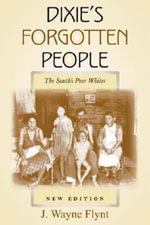
In Wayne Flynt’s Dixie’s Forgotten People: the South’s Poor Whites, he offers a clear picture while providing some understanding of the poor white culture that has been marginalized from mainstream society in the South. Describing something like a caste system in the South, Flynt portrays the historical and sociological developments that contributed to their plight. While agriculture was dominant in the earliest days of the English and Scots-Irish settlers, beginning in the latter half of the 19th century, the textile industry did much to shape southern life. At one point Flynt quotes from The Wasted Land, by Gerald Johnson to show that the textile industry in the South was as much a social endeavor as it was a commercial enterprise. The South offered cheap labor for the textile industry as it moved from the Northeastern factory establishments. There were some textile entrepreneurs who hoped to revitalize the decaying and gloomy prospects of the lower class whites of the South.

Southern Mill Towns

Textiles, poverty, and the South all strike a deep chord with me. I grew up in Alabama’s Tallapoosa County. My home was in Jackson’s Gap before the family moved into the metropolis of Dadeville (population 3,000). Many of my school classmates came from mill working families. Russell Mills, later to become the Russell Corporation, was perhaps the largest employer of the area. They were located in the neighboring town of Alexander City, along with another large textile manufacturer, Avondale Mills. Down the road in the other direction was another large employer of unskilled labor, Pepperell Mills in Opelika. In addition to these large industrial giants there were many smaller textile mills in the area. Indeed, from one county to the next, small villages and valleys were scattered with numerous small textile plants, each specializing in a particular product.

There were no unions in our area. Mill owners were known to make benevolent contributions to the community in the building of a school or a hospital or other community improvements. They provided employment for countless citizens, but never any guarantees. Alabama was (and still is) an “at will” state, which means that employees are hired at the will of the employer and can at any time be terminated if the employer has no further need of the employee’s services. If you saw the movie, Norma Rae, you saw something of the milieu of my childhood and the people I knew growing up. [That movie was filmed in Opelika, used many locals as extras, and the producers were very happy to find a mill in place that so perfectly fit with the story they wanted to tell – I’m not sure the mill operators realized what story the film was telling.]

Beginning in the 1860’s, the textile industry brought scores of people off the farm and into the towns and cities. Millwork was hard and tedious, but it offered a steady income that was more reliable than farming for the landless poor. When I was coming of age, I had classmates who were looking ahead to a life in the mills. Some quit school at age 16 to work in the mill, some began working after graduation from high school, glad to have a job that required no further education. There were others of us who had no desire for the routine grind of unskilled labor and we set our sights on life beyond the textile valleys of home. Some of us opted for college as a stepping stone, others gravitated to the military, but none of us ever imagined that the huge textile industry that surrounded us would not always be there for generation after generation.

Though mill work was not what I envisioned for myself, I looked around at the community and saw that the mills gave many people meaningful, productive work. They were able to have a roof over their heads, provide for their families, go to the ball game on Friday nights, and take time off to go fishing on the lake. Indeed, the mill was an integral part of southern life in three productive shifts. There were churches and schools that for all practical purposes served as adjuncts to life in the mills. I knew from talking to my classmates that at Russell Mills, you got a paid day off on your birthday, and after 25 years, you got a watch at the annual company picnic. Then when the Russell Corporation gained national prominence as the manufacturer of uniforms for the major sports teams, it became a source of pride for everyone in the community. But with no unions, there were no guarantees, other than the seemingly endless grind of the textile machinery that would always be in need of workers.

Capitalism Without Conscience

Then the unforeseen happened - the mighty spindles came to a stop. Mills that had been run by local families who had some connection and investment in the local community began to see stiffer competition in the global market. Warren Buffet’s conglomerate bought out The Russell Corporation and moved much of the production to Central America where unskilled labor was much cheaper than in Alabama. Avondale Mills went belly up trying to compete – they were bought out by another company which managed to keep 200 jobs in the community. Employment opportunities quickly drained, not only from Tallapoosa County, but from the surrounding counties as well. The Pepperell Manufacturing Company which had flourished in Opelika closed its doors in 2006. People with no specialized training or education were left with little opportunity. Mill work may have been bleak and mindless, but joblessness takes a much greater toll on the soul.

In my mind, what my hometown and the surrounding area witnessed was capitalism without conscience. In the past, wealthy mill owners at least felt some obligation to the community. Now the large conglomerates had no human face and no interest in the local community. They could pull up stakes and move to wherever they needed in order to increase profits, with no apparent remorse over the wounds left in the local community.

Perhaps what we experienced was what happened in the Northeast when the industry came South in search of cheap labor. At any rate, I can see a few lessons to be learned in the aftermath. One, it is shortsighted to attract industry with promises of cheap labor while doing precious little to educate and equip the citizens who will be the workforce. Two, companies will only heed the needs of the workers out of necessity – hence the need for workers to have a voice and some ability to broker terms with company management. A third lesson might be that perhaps we need more diversity in employment options - more small enterprises rather than one huge industry.These are lessons that my state seems still unwilling to consider. Alabama cheered when it attracted Mercedes, Honda, Hyundai and Toyota to build in the state, but is this not yet another example our state being at the mercy of large industries ever migrating from one labor source in search of cheaper wages?

Not Just a Regional Phenomenon

We are making and producing less and less, not just in the South, but throughout the United States. Remember when Walmart boasted “Made in America?” When was the last time you saw that slogan painted across a Walmart delivery truck? When my hometown saw The Russell Corporation shifting its workforce to the sweatshops of Honduras, the same thing was happening throughout the country. Manufacturing was leaving, moving to third world countries where goods could be manufactured for less money to bring companies and shareholders higher profits. Most of the U.S. population, while they may have wanted industries to stay, seemed perfectly willing to accept lower prices at the checkout line as a fair outcome. We heard no great unified protest from the public as individuals and communities throughout the South as well as across the heartland of America struggled with job losses and "vocational retraining" in the absence of real jobs.

Where Do We Go From Here?

I see many questions at hand. How are we doing? What are our prospects for the future? Do we have a citizenry equipped to contribute to the well being and the common good of the community? Are we training the next generation to be vocationally adept so that they can provide for themselves and contribute to the community? Will we start making things again? Will business and industry have any investment in the local community? Will what happens in my community (and in your community) ever be as important as profits for the huge corporations that our polititians remind us we need in order to have jobs? Will company bosses ever again feel any compunction to give back to the community? Will the U.S. worker be once again marginalized as has been the lot of so many working poor in the South throughout its history?

Unfortunately, for too long it has benefited society to have a readily available workforce that is poor and needy, and therefore willing to accept whatever menial labor we need done, at the lowest wage possible. We will placate the low wage earner from time to time with some token benefit: a gift watch here, a day off there, a Christmas bonus and a pat on the back. As long as society at large benefits from a permanent underclass we will always have the poor with us. Once they were in tenant farm shacks, then in mill villages and mining camps. Now we find them in urban housing projects, rural trailer parks, and rental housing with many falling prey to cheap whiskey, meth, and cable TV to pass the time in the absence of meaningful work.

I have hope for humanity because we carry with us the aspirations for justice, freedom and peace. We also carry with us a penchant for war, greed and oppression. Rabbi Zalman Schacter-Shalomi says that "There is more good than evil in the world—but not by much." It is that little bit more that can lead us to a better world. Will we find a way to move toward the common good, or will we continue to slouch toward the dystopia which George Orwell, Aldous Huxley and others have warned us of?

                                                                                                                                                    ~ Charles Kinnaird


An added note: I would be remiss not to include a comment from a reader when this essay was first posted. She shares from her own experience and corrects some of my account of Russell Mills recent history:

Thank you for writing this. I, too, have a history that is heavily tied to textile mills in Alabama. My great-great grandfather, great-grandmother, great-grandfather, grandmother and grandfather all worked at the West Point mills in Langdale and West Point. I was also one of the first employees hired in Atlanta, when Russell moved most of their corporate offices.

There is one piece of history that you have a little off, though. It wasn't Berkshire Hathaway that offshored the mills. It was Jack Ward, the ex-CEO of Russell. I helped launch the Zt and assisted with the retail brand marketing to Wal-mart and others. Many of our team flew to Honduras and Mexico to view the textile processes there. Those years were between 1999-2002. Ironically, Mr. Ward is an "Executive-in-Residence" for The Center for Ethics and Corporate Responsibility for the J. Mack Robinson School of Business, Georgia State University.

Here's a piece of an article:

"Within months of Ward's arrival, Russell announced a major restructuring. Over a three-year period, the company planned to eliminate about 4,000 jobs, or 23 percent of its workforce; close about 25 of its 90 plants, distribution centers, and other facilities; and move most of the final assembly of garments abroad, to Mexico, Honduras, and elsewhere in the Caribbean basin. The company expected to take charges of $100 to $125 million during the restructuring period. Russell hoped these efforts would result in annual savings of $50--$70 million. Part of these funds would then be used to bolster the marketing and advertising of Russell's brands, including tripling the advertising budget to $25 million per year. Russell also established a second headquarters in Atlanta in February 1999, a move designed to make travel more convenient and to aid in recruiting efforts, particularly of marketing aces who did not relish the idea of living in the small town of Alexander City."  
                                                                                                  ~ Kim Martin Bannerman August 8, 2011


*****


This photograph, taken by a photographer from the U.S. Department of Agriculture, shows a female employee tending the machines spinning cotton thread at the Pepperell Manufacturing Company textile mill in Lee County, Ala.

-- From Howard Washington Odum Papers (#3167), Southern Historical Collection, University of North Carolina at Chapel Hill.


 *****

Photo from the
Alabama Department of Archives and History


  Avondale Mills in Alexander City

Avondale Mills, a textile plant, was a longtime employer in Alexander City until the company folded in 2006. Parkdale Mills purchased the plant, averting the loss of about 200 jobs.


Overseer and two doffer boys in front of machinery at Avondale Mills in Alabama. 
 
*****


Photo by Lewis Hine
Children who worked at a textile mill in Pell City, Alabama, in 1910


This photo is from an insightful article, "The Legacy of a Cotton Culture," by Larry Lee, director of the Center for Rural Alabama


*****

Recommended Reading:

“The Legacy of a Cotton Culture,” by Larry Lee. The Daily Yonder, March 26, 2010. Online at http://www.dailyyonder.com/legacy-cotton-culture/2010/03/25/2659

“There Is Such A Thing As Rural Development,” by Larry Lee. The Daily Yonder, April 9, 2010. Online at http://www.dailyyonder.com/rural-and-development-can-get-along/2010/04/08/2682

“17 Rules for a Sustainable Local Community,” by Wendell Berry, online at
http://sustainabletraditions.com/2010/10/wendell-berry-17-rules-for-a-sustainable-local-community/#

Dixie’s Forgotten People: The South’s Poor Whites, by Wayne Flynt, Indiana University Press; New Edition (October 19, 2004)

Poor but Proud: Alabama's Poor Whites, by Wayne Flynt, University Alabama Press (November 8, 2001).

All Over But the Shoutin’, by Rick Bragg, Vintage (September 8, 1998).


*

Friday, February 15, 2013

The State of our Union – a Mixed Bag of Hope

A Brief Look at President Barack Obama's Second Inaugural Address and the State of the Union Speech

Capitol Hill  (courtesy of Wikimedia Commons)

Within the span of a few weeks I have twice heard what I consider to be inspiring words from President Barack Obama. I hope that anyone who feels differently about the president’s remarks will bear with me for this short space, because I am not entirely on board as far as political enthusiasm goes yet there are some reasons for me to have hope.

When poet Robert Frost visited Washington D.C. late in his life, he was making some comments at a public gathering. He said that some people wondered what his political affiliation was. He told the group that he had never stated it publicly, “but if you read what I write, you’ll know that I’m a Democrat.” After a brief pause, he added, “But I haven’t been happy since 1896!”  In my case,  I have never joined a political party, but readers of this blog will know where my sympathies usually lie.

I will never forget that night watching the Democratic convention in the summer of 2004 when an unknown Barack Obama delivered the key note address.  He declared that “there is not a liberal America and a conservative America — there is the United States of America. There is not a black America and a white America and Latino America and Asian America — there's the United States of America. The pundits like to slice-and-dice our country into Red States and Blue States; Red States for Republicans, Blue States for Democrats. But I've got news for them, too: We worship an awesome God in the Blue States, and we don't like federal agents poking around in our libraries in the Red States. We coach Little League in the Blue States, and, yes, we've got some gay friends in the Red States. There are patriots who opposed the war in Iraq and there are patriots who supported the war in Iraq.”

As he continued with his speech I said to my wife, “this guy could one day be our president!” I did not imagine that that day would come as soon as it did. Fast forward a bit and you see the harsh realities of governing in a land that is polarized by ideologies and political gamesmanship.  Even Obama’s greatest achievement in passing healthcare legislation was, in my opinion, not nearly what could or should have happened. But then, there is the reality of governing and moving things forward when there is intractable opposition.

The Second Inaugural Address

Now as we stand at the beginning of a second presidential term, I continue to have some hope, but I also have some reservations. We’ll do the hope part first: The president’s second inaugural address was one that was full of light and hope. Here are some statements that stood out for me:

“This generation of Americans has been tested by crises that steeled our resolve and proved our resilience. A decade of war is now ending. An economic recovery has begun. America's possibilities are limitless, for we possess all the qualities that this world without boundaries demands: youth and drive; diversity and openness; an endless capacity for risk and a gift for reinvention. My fellow Americans, we are made for this moment, and we will seize it - so long as we seize it together.”


“For we remember the lessons of our past, when twilight years were spent in poverty, and parents of a child with a disability had nowhere to turn. We do not believe that in this country, freedom is reserved for the lucky, or happiness for the few. We recognize that no matter how responsibly we live our lives, any one of us, at any time, may face a job loss, or a sudden illness, or a home swept away in a terrible storm. The commitments we make to each other - through Medicare, and Medicaid, and Social Security - these things do not sap our initiative; they strengthen us. They do not make us a nation of takers; they free us to take the risks that make this country great.”

“We, the people, still believe that enduring security and lasting peace do not require perpetual war.”

The State of the Union Address

Inaugural addresses are supposed to be a unifying vision statement of where we would like to be as a nation. The state of the union address which has become an annual affair in modern times is not without ceremonial value, but it is also part of the president’s constitutional duty to report to the congress as to the state of the union. It tends to be more of a platform to outline the political policies that the president would like to see enacted.

The president’s state of the union address last Tuesday was, once again, an inspirational speech that gave me cause for hope. I liked, for example, the president’s statement that we should decide to finally listen to what science is telling us about climate change, and that if congress did not act for the good of the environment, then he would take presidential action. [Side bar statement: I am old enough to remember watching with great concern as a sixth-grader the news reports about trees dying in the hills of Los Angeles due to smog, and Lake Erie periodically catching on fire due to the amount of pollution in its waters. I witnessed the country respond to those crises by enacting legislation to curb the pollution of our air and water until we saw trees thriving again in California and the waters of Lake Erie running clear again. I wonder why we cannot respond today with that same kind of national purpose to do what is needed for the environment.]

For me, the most moving moment was when the President began to talk about the victims of gun violence who deserved a vote. People were standing and applauding, and he continued to speak above the applause with a litany of individuals who deserved a vote on reducing gun violence in our country.  There was also the call to improve our voting system so that no one’s voice is suppressed by having to wait long hours just to cast a vote. These are both significant ideals because it is the vote, not the gun that will make us safe.

The president also talked about getting our troops out of Afghanistan, and I am always glad to hear about the de-escalation of war. As he talked about our national defense in light of terrorism, however, I detected what could end up being the president’s most dangerous policy, and even a continuing blight upon his presidency:

Today, the organization that attacked us on 9/11 is a shadow of its former self. Different al Qaeda affiliates and extremist groups have emerged – from the Arabian Peninsula to Africa. The threat these groups pose is evolving. But to meet this threat, we don’t need to send tens of thousands of our sons and daughters abroad, or occupy other nations. Instead, we will need to help countries like Yemen, Libya, and Somalia provide for their own security, and help allies who take the fight to terrorists, as we have in Mali. And, where necessary, through a range of capabilities, we will continue to take direct action against those terrorists who pose the gravest threat to Americans.
As we do, we must enlist our values in the fight. That is why my Administration has worked tirelessly to forge a durable legal and policy framework to guide our counterterrorism operations. Throughout, we have kept Congress fully informed of our efforts. I recognize that in our democracy, no one should just take my word that we’re doing things the right way. So, in the months ahead, I will continue to engage with Congress to ensure not only that our targeting, detention, and prosecution of terrorists remains consistent with our laws and system of checks and balances, but that our efforts are even more transparent to the American people and to the world.
The president did not use the term “drone warfare” but he talked about “a range of capabilities” to “take direct action against those terrorists who pose the gravest threat.”  He also alluded to the questionable legality of the use of drones by promising to keep congress informed because “I recognize that in our democracy, no one should just take my word that we’re doing things the right way.”

Predator Drone (U.S. Air Force photo)
If the question had not been raised about the country’s use of drones in the Middle East, the president may not have even addressed counterterrorism operations. It is unfortunate that as a nation, we still do not understand that it is the footprint of our empire that breeds terrorism. Our invasion of Iraq only furthered the cause of al Queda, and our dropping of bombs on civilians as we try to ferret out the terrorists only fans the flames of the terrorists. Bill Moyers recently delivered an excellent two-minute commentary, “When We Kill without Caring,” in which he posed the question, regarding drone warfare, “Does it give rise to second thoughts by those judges who prematurely handed our president the Nobel Prize for Peace? Better they had kept in on the shelf in hopeful waiting, untarnished.”

It may be that any man, no matter what his ideals are, becomes imprisoned by the imperial machine when he becomes president of the United States (we’ve yet to see how a woman would respond). One wonders, for example, how Lyndon Johnson would have fared without Viet Nam. He was the president who had the vision to implement Headstart, Medicare and Medicaid. He was the one with the courage to make civil rights legislation happen (at the expense of losing the South to the Republican Party) because it was the right thing to do. But when it came to war, he could not see beyond an empire’s myopic need to fight.  It just may be that our current president will have to succumb to the will of the war machine, even if the war ends up looking remote and clinical in the form of an unmanned remote control aircraft.

My Own Bias (In the Interest of Full Disclosure)

I should state my own bias that shapes my views on what is best for our country. First of all, in matters of war and national defense, I side with our Quaker friends who have steadfastly resisted violence and continue to declare that war is not the answer. In our modern world, diplomacy and engagement are better tools than armies and guns when it comes to stability. The world is now too small, the weapons too big, and the stakes too high for us to continue to rely upon warfare as a means of international negotiation. Someone needs to hold us to a higher ethic than mere  nationalistic hegemony, and the Quakers along with others are doing just that.

In matters of a healthy society, I am for the common good and I take my cue from the Parable of the Sheep and the Goats in  Matthew 25 as to how we treat “the least of these.” For me, that parable of Jesus is not just a “final exam” to illustrate who gets into the Kingdom of Heaven. In fact, I do not consider it to be a story about heaven.  I see it as a guide to what constitutes a just and compassionate society that works for the good of all. The parable does not speak of individuals gathered before the Son of God on Judgment Day. The way Jesus frames it, he speaks of “all the nations gathered,” with each nation being judged on the basis of how its marginalized and weakest citizens are treated.  Thus, the test of a just nation and a compassionate society is based upon how the sick, the weak, the needy, the hungry, and those in prison are treated. This is where Catholic social teaching hits the mark, particularly in matters of social and economic justice. In the U.S., we have a good record in some respects of improvements that benefit the common good and which provide a safety net for the down-and-out. In other respects we have a long way to go before we can be called a just society.

On measure, I have hope on this day as we move ahead. On the other hand, I realize that we are still a polarized country, the process of governing is still cumbersome, and any progress will probably come in fits and starts. Nevertheless, we have a chance to make some real progress but we will not get there unless we all get there.


*

Wednesday, July 11, 2012

Longing for the Peaceable Kingdom: A Brief History of Hope in Modern Times


Or 


Why can’t everybody just behave themselves and do the right thing?


One of the many versions painted by Edward Hicks of  The Peaceable Kingdom
(photo courtesy of Wikimedia Commons) 


A New World Coming

In 1970, The Mamas and the Papas sang about “a new world coming and it’s just around the bend.”  I was 15 years old, going on 16, and I took some hope from those words sung by Cass Elliot over the radio waves. We had emerged from the 1960s which was an unsettled time of protest and demonstration.  The late sixties saw a potent and fertile combination of movements reflecting peace, destruction, love, rebellion, hope and disillusion. There were hippies dropping out, Beatles breaking up, students protesting and others shouting, “America: love it or leave it!” We were seeing racial unrest in city after city while people from our hometowns were still fighting and dying in Viet Nam.

I was glad that someone was singing,”Yes, a new world’s coming/ The one we’ve had visions of/ Coming in peace, coming in joy, coming in love.” I certainly longed for that new world to arrive. Perhaps I took heart thinking that as my generation emerged, things would indeed change as we left the old behind to create the new.

Then, as we say, Life happened. Instead of finding new ways of living, we are still struggling, disagreeing, fighting senseless wars, slowly killing ourselves in a suburban life of competition, career advancement, family break-ups, disconnection. We are struggling to hold on to our own spot of what we used to call God’s green earth (until it got paved and “green” became a politically partisan term).

Spiritual Awakening

I just read an article by Be Scofield in Tikun Daily blog titled “Why Eckhart Tolle’s Evolutionary Activism Won’t Save Us.” Eckhart Tolle apparently underwent a profound inner spiritual awakening after which he looked at life entirely differently and the world suddenly made sense. He found himself living with hope rather than despair. Tolle’s books, A New World, and The Power of Now present a hopeful message of transforming the world by way of inner spiritual awakening. Scofield’s article (which you can read here) provides a very good in depth look at Tolle, his ideas, and what inner spirituality accomplishes vs. the hard work of ethics and social justice.  I recommend Scofield’s article because I am one who is naturally drawn to the inner spiritual path.  I am always ready to hear the next version of “a new world coming.” I try to balance my natural inner spiritual impulse by listening to those who speak for justice and equality by way of social action.

I do not wish in any way to discredit spiritual practice. I firmly believe that it brings health, purpose and well being to the individual. I also think that it is important to understand the limitations of individual spirituality. I mentioned earlier the turmoil of the 1960s. There was something else happening during that same time period. Evangelist Billy Graham was in the prime of his successful career in preaching the gospel in his famous “crusades” all across the country. From the 1950s through the ‘60s and into the ‘70s Graham filled football stadiums wherever he went. His work saw thousands upon thousands respond to his initiation to spiritual rebirth. Billy Graham sincerely believed, like Eckart Tolle, that if you get the individual right, the world will be right. In Evangelical Christianity, there was often no call to social action because it was assumed that if everyone could just be converted to Christ, the world would be a better place.

Getting the World Right

There was an inspiring anecdote that I heard on more than one occasion during the 1970s about a man who was busy with some important matter and his young son kept interrupting him. The man wanted to give his son something to occupy him for a while so he decided to quickly make a puzzle for the little boy. Finding a picture of a world map in a magazine, he tore it into sections and asked his little boy to see if he could put it back together. To his surprise, the boy quickly returned with the world puzzle all in place. When the father asked him how he did that so quickly, the boy replied that he noticed a picture of a man on the other side of the magazine page. “I knew if I got the man right, the world would be right.” This story captured what Billy Graham and most Evangelical Christians believed – that if you get the individual right, the world would be right.

Ah, but there’s the rub. In later years, Rev. Graham himself reflected upon his disappointment that for all of his success in bringing lost souls into the fold, there was no corresponding difference in society. We still had the same crimes, injustices, and abuses. There was still corruption and dishonesty in business and politics.

Examples of Spirituality and Social Reform

We can look to the 18th and 19th centuries for examples of how spiritual enlightenment led to true social reform. William Wilberforce (1759 - 1833) was instrumental in bringing about the abolition of slave trade in Britain as well as prison reform, education reform, workers’ rights, and the establishment of the Society for the Prevention of Cruelty to Animals.  Wilberforce was an English landowner and a Member of Parliament who had a spiritual awakening during the Wesleyan Revival. His insights may have come by way of personal prayer and devotion, but the social changes that he helped bring about came about as a result of years of tireless work.  He engaged the political process in Parliament and coordinated economic measures to help his fellow citizens to finally agree to end the slave trade. One measure was taken that served as both a symbolic act and an economic lever: Wilberforce along with many others refused to buy sugar processed by slave labor.

John Woolman was an American Quaker who lived from 1720 to 1772. At an early age, he came to see slaveholding as being inconsistent with his Christian faith. He worked on a personal level to convince his fellow Quakers that slaveholding was wrong, even though some Quakers bought slaves in order to treat them humanely. Like Wilberforce in England, Woolman engaged in personal acts of protest against an unjust system. He refused to wear clothing made from dyed cloth because the dye industry in the American Colonies was entirely done by slave labor. One can imagine that he must have made quite a visual impression wherever he went, wearing clothes that were only the color of natural cotton of wool. 

Like Wilberforce, John Woolman’s spirituality influenced his view of what is just and humane. Also like Wilberforce, his compassion extended to animal welfare. At one point, he stopped taking the stagecoach for travel because it was too cruel and injurious to the horses. Unlike Wilberforce, Woolman was not a public political figure. His influence was on a personal level through his networking within the Quaker communities. By the end of his life, Woolman had convinced many within the Society of Friends (Quaker) to free their slaves and eventually the Friends were leaders in the Abolition Movement in the U.S.

Taking the Long View of Awareness, Enlightenment, and Diligent Work

Finding the peaceable kingdom involves inner work, outer discipline, and community involvement. Sometimes we just have to live into the idea that a better society is possible. We live with setbacks and disappointments, but we also take time to remember that some things are better than they used to be. We have worker’s rights and child labor laws that would make Charles Dickens proud and William Blake ecstatic. We still have racial inequity, but we did abolish slavery and eventually enacted civil rights legislation so that at the very least we understand that as a society we need to be standing for equal rights. There is a continuing struggle to secure equal opportunity for women and to recognize equality for gays and lesbians, but at least there is greater awareness than there was even ten years ago. We are not where we should be in green technology, yet more people are aware of the need to care for the environment. There are still plenty of scoundrels in the world, but there are also more people with enlightened views of equity and justice. 

I believe it takes all kinds of people bringing various gifts to create a society that works for the common good. Some are talented at organizing people and publically engaging the political process. Others are better at finding ways to educate people about economic and social injustices. If you can’t be a William Wilberforce to fight the public political fight, maybe John Woolman’s quieter personal style is more your speed. Most of us are not in a position to influence thousands or even hundreds, but we can have some influence on our neighbor.

We already have many opportunities to take a personal stand that can be both symbolic and economic, just as Wilberforce’s choice of sugar or Woolman’s avoidance of dyes. We can look for Fair Trade products in buying coffee, clothing or furniture. We can choose environmental friendly products and green technology. Certainly there is a vital role each of us can play in creating a better society that speaks to the common good. Some of us will get there by way of spiritual practice, some by ethical determination, some by way of compassion and still others out of a desire to preserve the earth and its resources. Some will believe that if we can sing about it, surely it is possible and they will hold on to that hope and inspiration during the long and tedious process of making the dream a reality.

So work if you can, pray if you will, and sing if you must. There is still a hope within us for that peaceable kingdom.

*    *    *    *    *

Here are some previous posts affirming that things are better than they were:


*

Thursday, January 5, 2012

Make Commerce, Not War


That clown car carrying the Republican presidential candidates is down one more since the Iowa Caucus ended with Mitt Romney, Rick Santorum and Ron Paul essentially sharing the top 75% of the votes.  Hearing the brief clips from the candidates' stump speeches, I found myself agreeing with Ron Paul in terms of foreign policy more than any of the others.  It is his anti-war stance that I like. He sees the whole of the Iraq and Afghanistan wars as unnecessary. I agree. I was opposed to those war endeavors from the beginning. Rick Santorum, on the other hand, seems to think that the President of the United States should be Emperor of the World and bomb whoever wants to get in the way of us and our “freedom.”

Ron Paul would prefer business ties over war mongering. My anti-war stance comes from a different philosophical base, being more in line with the Quakers' historical stand against war.  Paul’s libertarian view does not make adequate provision for the preservation of human rights, in my opinion, but at the same time, not-war is always better than war. As Benjamin Franklin said, “There was never a good war or a bad peace.” So I’ll take not-war any day, however you can get there.

War takes its toll on society. We have been engaged in full-scale armed conflict for over ten years now.  We have tried to shield ourselves from its effects by relying upon our lean volunteer professional armed forces and not forcing the public to make any visible sacrifice or life-style change. Instead, we have let a new “fighting class” bear the brunt. This fighting class includes many from lower socio-economic levels whose best opportunity is to join the military. It is those men and women and their families who know the pressures of war after numerous re-deployments, deaths and permanent injuries both mental and physical. Our congressmen and senators and the public, by and large, have avoided the obvious scars of war, shifting them to the shadows of our paid warrior class.

But the truth is, we all bear the ill effects of war, whether it is obvious or not. We have already been too long in a war that has cost more than we can pay in material and monetary means and has done nothing to lessen the threat of terrorism.  It is time to turn down the war machine.  If we can’t “make love, not war,” as some said back in the 1960s, we can at least start to spend our time, money and efforts on projects at home: rebuilding roads, bridges, schools, and parks; paying attention to our children; working to increase the common good.  It is time to find a common purpose other than war. My hope is that the time of tearing down will come to an end and the time of building up will come to ascendency. 


*

Friday, March 25, 2011

Moving Toward the Common Good, or Slouching Toward Dystopia?

And was Jerusalem builded here,
Among these dark Satanic Mills?

                         ~William Blake (from "Jerusalem")

[This is my second essay inspired by reading Wayne Flynt's book. The first essay can be found here.]

In Wayne Flynt’s Dixie’s Forgotten People: the South’s Poor Whites, he offers a clear picture while providing some understanding of the poor white culture that has been marginalized from mainstream society in the South. Describing something like a caste system in the South, Flynt portrays the historical and sociological developments that contributed to their plight. While agriculture was dominant in the earliest days of the English and Scots-Irish settlers, beginning in the latter half of the 19th century, the textile industry did much to shape southern life. At one point Flynt quotes from The Wasted Land, by Gerald Johnson to show that the textile industry in the South was as much a social endeavor as it was a commercial enterprise. The South offered cheap labor for the textile industry as it moved from the Northeastern factory establishments. There were some textile entrepreneurs who hoped to revitalize the decaying and gloomy prospects of the lower class whites of the South.

Southern Mill Towns

Textiles, poverty, and the South all strike a deep chord with me. I grew up in Alabama’s Tallapoosa County. My home was in Jackson’s Gap before the family moved into the metropolis of Dadeville (population 3,000). Many of my school classmates came from mill working families. Russell Mills, later to become the Russell Corporation, was perhaps the largest employer of the area. They were located in the neighboring town of Alexander City, along with another large textile manufacturer, Avondale Mills. Down the road in the other direction was another large employer of unskilled labor, Pepperell Mills in Opelika. In addition to these large industrial giants there were many smaller textile mills in the area. Indeed, from one county to the next, small villages and valleys were scattered with numerous small textile plants, each specializing in a particular product.

There were no unions in our area. Mill owners were known to make benevolent contributions to the community in the building of a school or a hospital or other community improvements. They provided employment for countless citizens, but never any guarantees. Alabama was (and still is) an “at will” state, which means that employees are hired at the will of the employer and can at any time be terminated if the employer has no further need of the employee’s services. If you saw the movie, Norma Rae, you saw something of the milieu of my childhood and the people I knew growing up. [That movie was filmed in Opelika, used many locals as extras, and the producers were very happy to find a mill in place that so perfectly fit with the story they wanted to tell – I’m not sure the mill operators realized what story the film was telling.]

Beginning in the 1860’s, the textile industry brought scores of people off the farm and into the towns and cities. Millwork was hard and tedious, but it offered a steady income that was more reliable than farming for the landless poor. When I was coming of age, I had classmates who were looking ahead to a life in the mills. Some quit school at age 16 to work in the mill, some began working after graduation from high school, glad to have a job that required no further education. There were others of us who had no desire for the routine grind of unskilled labor and we set our sights on life beyond the textile valleys of home. Some of us opted for college as a stepping stone, others gravitated to the military, but none of us ever imagined that the huge textile industry that surrounded us would not always be there for generation after generation.

Though mill work was not what I envisioned for myself, I looked around at the community and saw that the mills gave many people meaningful, productive work. They were able to have a roof over their heads, provide for their families, go to the ball game on Friday nights, and take time off to go fishing on the lake. Indeed, the mill was an integral part of southern life in three productive shifts. There were churches and schools that for all practical purposes served as adjuncts to life in the mills. I knew from talking to my classmates that at Russell Mills, you got a paid day off on your birthday, and after 25 years, you got a watch at the annual company picnic. Then when the Russell Corporation gained national prominence as the manufacturer of uniforms for the major sports teams, it became a source of pride for everyone in the community. But with no unions, there were no guarantees, other than the seemingly endless grind of the textile machinery that would always be in need of workers.

Capitalism Without Conscience

Then the unforeseen happened - the mighty spindles came to a stop. Mills that had been run by local families who had some connection and investment in the local community began to see stiffer competition in the global market. Warren Buffet’s conglomerate bought out The Russell Corporation and moved much of the production to Central America where unskilled labor was much cheaper than in Alabama. Avondale Mills went belly up trying to compete – they were bought out by another company which managed to keep 200 jobs in the community. Employment opportunities quickly drained, not only from Tallapoosa County, but from the surrounding counties as well. The Pepperell Manufacturing Company which had flourished in Opelika closed its doors in 2006. People with no specialized training or education were left with little opportunity. Mill work may have been bleak and mindless, but joblessness takes a much greater toll on the soul.

In my mind, what my hometown and the surrounding area witnessed was capitalism without conscience. In the past, wealthy mill owners at least felt some obligation to the community. Now the large conglomerates had no human face and no interest in the local community. They could pull up stakes and move to wherever they needed in order to increase profits, with no apparent remorse over the wounds left in the local community.

Perhaps what we experienced was what happened in the Northeast when the industry came South in search of cheap labor. At any rate, I can see a few lessons to be learned in the aftermath. One, it is shortsighted to attract industry with promises of cheap labor while doing precious little to educate and equip the citizens who will be the workforce. Two, companies will only heed the needs of the workers out of necessity – hence the need for workers to have a voice and some ability to broker terms with company management. A third lesson might be that perhaps we need more diversity in employment options - more small enterprises rather than one huge industry.These are lessons that my state seems still unwilling to consider. Alabama cheered when it attracted Mercedes, Honda, Hyundai and Toyota to build in the state, but is this not yet another example our state being at the mercy of large industries ever migrating from one labor source in search of cheaper wages?

Not Just a Regional Phenomenon

We are making and producing less and less, not just in the South, but throughout the United States. Remember when Walmart boasted “Made in America?” When was the last time you saw that slogan painted across a Walmart delivery truck? When my hometown saw The Russell Corporation shifting its workforce to the sweatshops of Honduras, the same thing was happening throughout the country. Manufacturing was leaving, moving to third world countries where goods could be manufactured for less money to bring companies and shareholders higher profits. Most of the U.S. population, while they may have wanted industries to stay, seemed perfectly willing to accept lower prices at the checkout line as a fair outcome. We heard no great unified protest from the public as individuals and communities throughout the South as well as across the heartland of America struggled with job losses and "vocational retraining" in the absence of real jobs.

Where Do We Go From Here?

I see many questions at hand. How are we doing? What are our prospects for the future? Do we have a citizenry equipped to contribute to the well being and the common good of the community? Are we training the next generation to be vocationally adept so that they can provide for themselves and contribute to the community? Will we start making things again? Will business and industry have any investment in the local community? Will what happens in my community (and in your community) ever be as important as profits for the huge corporations that our polititians remind us we need in order to have jobs? Will company bosses ever again feel any compunction to give back to the community? Will the U.S. worker be once again marginalized as has been the lot of so many working poor in the South throughout its history?

Unfortunately, for too long it has benefitted society to have a readily available workforce that is poor and needy, and therefore willing to accept whatever menial labor we need done, at the lowest wage possible. We will placate the low wage earner from time to time with some token benefit: a gift watch here, a day off there, a Christmas bonus and a pat on the back. As long as society at large benefits from a permanent underclass we will always have the poor with us. Once they were in tenant farm shacks, then in mill villages and mining camps. Now we find them in urban housing projects, rural trailer parks, and rental housing with many falling prey to cheap whiskey, meth, and cable TV to pass the time in the absence of meaningful work.

I have hope for humanity because we carry with us the aspirations for justice, freedom and peace. We also carry with us a penchant for war, greed and oppression. Rabbi Zalman Schacter-Shalomi says that "There is more good than evil in the world—but not by much." It is that little bit more that can lead us to a better world. Will we find a way to move toward the common good, or will we continue to slouch toward the dystopia which George Orwell, Aldous Huxley and others have warned us of?


                                                                                                                         Charles Kinnaird


*****


This photograph, taken by a photographer from the U.S. Department of Agriculture, shows a female employee tending the machines spinning cotton thread at the Pepperell Manufacturing Company textile mill in Lee County, Ala.

-- From Howard Washington Odum Papers (#3167), Southern Historical Collection, University of North Carolina at Chapel Hill.


 *****
Photo from the
Alabama Department of Archives and History


  Avondale Mills in Alexander City

Avondale Mills, a textile plant, was a longtime employer in Alexander City until the company folded in 2006. Parkdale Mills purchased the plant, averting the loss of about 200 jobs.


Overseer and two doffer boys in front of machinery at Avondale Mills in Alabama. 
 
*****

Photo by Lewis Hine
Children who worked at a textile mill in Pell City, Alabama, in 1910.


This photo is from an insightful article, "The Legacy of a Cotton Culture," by Larry Lee, director of the Center for Rural Alabama


*****

Recommended Reading:

“The Legacy of a Cotton Culture,” by Larry Lee. The Daily Yonder, March 26, 2010. Online at http://www.dailyyonder.com/legacy-cotton-culture/2010/03/25/2659

“There Is Such A Thing As Rural Development,” by Larry Lee. The Daily Yonder, April 9, 2010. Online at http://www.dailyyonder.com/rural-and-development-can-get-along/2010/04/08/2682

“17 Rules for a Sustainable Local Community,” by Wendell Berry, online at
http://sustainabletraditions.com/2010/10/wendell-berry-17-rules-for-a-sustainable-local-community/#

Dixie’s Forgotten People: The South’s Poor Whites, by Wayne Flynt, Indiana University Press; New Edition (October 19, 2004)

Poor but Proud: Alabama's Poor Whites, by Wayne Flynt, University Alabama Press (November 8, 2001).

All Over But the Shoutin’, by Rick Bragg, Vintage (September 8, 1998).


*

Wednesday, March 24, 2010

Another Word about Healthcare and the Common Good


It’s not dark yet. The House of Representatives has passed, and the president has signed into law a new bill on healthcare. For this, I am glad. At the first of the year, I was advocating that we go back to the drawing board on this one. In my blog posting for January 2 I said “the amalgam of ideas masquerading on the Hill as healthcare reform should be scrapped. It makes much more sense to extend Medicare to all... The current legislative proposal seems to favor the insurance companies, just as the financial 'bailout' only favored the banks, and Medicare reform favored the pharmaceutical companies.”

I didn’t like the fact that the bill had been watered down to accommodate Republican interests, only to get no Republican votes. I didn’t like the fact that so many special deals were added to gain the vote of some Democratic congressmen who lacked the courage of any conviction other than the desire to be re-elected. It reminded me of how much the process stinks.

Even so, I am greatly relieved that this bill has passed. It is not a perfect bill by any stretch of the imagination. I also realize that there is still work to do in the senate, and there is opposition from several fronts, but it is my hope that the bill signals a turning point in our commitment to the common good.

A Society that Works

I began that entry on January 2 by stating what, in my view, makes for a society that works:

1. Access to education
2. Access to transportation
3. Access to healthcare

If everyone in every strata of society has access to these three things, we all benefit. We are divided in the United States on how to achieve these big three. On the one hand are those who say that the only way to achieve the common good is for all to work together in community. Then there are those who say, “I worked hard for my college degree, my BMW and my Blue Cross coverage. If others want it they should work hard too.” So many of us are so afraid that some undeserving person may get some relief, that we turn our backs on the widespread suffering and poverty that exists right here among us. Too many have been willing to partition themselves off from the needy and the working poor in an effort to not have to deal with the problem. Others are waging a crusade against injustice. Then there are those who realize that everyone benefits by living in a society that works to the benefit of all.

But Why Should the Government Do It?

“The government has absolutely no business getting involved in healthcare.” My own Southern democratic father uttered words similar to this back in 1965 when Medicare was passed. I think it was a dark day for him. However, no one was happier with Medicare when he and my mother became eligible. He had never dreamed that he would have been able to afford the medical interventions that added quality years to his life. Those were pivotal years when Medicare, Medicaid, and Civil Rights legislation were passed. The social landscape was changed for the better. President Lyndon Johnson knew that those “Great Society” measures were not smart politically, but that they were good for the country. He made the statement when Civil Rights legislation passed due to his constant behind the scenes working of the process, “We (democrats) have lost the South for the next generation.” He was right, those southern dixiecrats all eventually moved to the Republican Party. But he was also right in pushing for that massive legislation. I must confess that as a child of the South growing up in the 1960s, I did not have a favorable view of LBJ. Looking back, however, I am more and more impressed by his political courage in choosing the right thing over the expedient thing. [Side note: I also realize that LBJ totally missed it on Viet Nam – what can I say, he was a complicated man]

What does all of this mean for the healthcare bill that passed this week? It is not dark yet, my friend. For those who, like me, wanted a public option – or even Medicare for all – this is at least a starting point that will set us toward a more civil society. For those who have feared and vehemently opposed this bill, relax. Do not let fear be your guide. One day you will likely come to appreciate this measure just as much as my father came to appreciate Medicare. We have yet to see how smart this is politically, but any step toward improving the common good is a step in the right direction. As you can see, my sense is that it is definitely not dark yet.


*

Saturday, January 2, 2010

Common Good vs. Corporate Greed: the Dilemma of Healthcare in America

Part of the healthcare debate in the U.S. has been the question of whether healthcare in a right or a privilege. This is the wrong question, and is often laden with hot-button issues. The real question is what is good for society? My take on it is that there are three basic things that make a society function well:

1. Access to education
2. Access to transportation
3. Access to healthcare

If these things are in place for the population, then you have an educated workforce ready to do the job, able to get to work and healthy enough to contribute to society. You don’t have to decide if healthcare is a right or a privilege, but it becomes obvious that optimal health for all citizens benefits the whole of society. The same is true for education and transportation. If they are available to all, everyone benefits.

The problem in Washington D.C. is that corporations are spending millions on politicians to keep their own interests secure with little regard for the common good. When Medicare “reform” was enacted to cover prescription medications, the primary beneficiaries were the pharmaceutical companies, not the Medicare recipients. The way healthcare “reform” is shaping up now in congress, it will benefit no one except the insurance companies. Insurance companies and pharmaceutical companies are no more to be trusted than the “fat cat” bankers when it comes to the good of the people.

I am a healthcare worker in favor of healthcare reform that will allow universal access to healthcare. Since we are seeing ever-increasing unemployment and the advent of the global market, it is wrong to place the onus on the individual people, requiring that they buy health insurance (if you are out of a job, requiring you to buy insurance is not going to solve the healthcare problem). It is also wrong to require businesses to furnish insurance when they must compete with international companies who do not have to figure the cost of healthcare into their product.

Therefore, the amalgam of ideas masquerading on the Hill as healthcare reform should be scrapped. It makes much more sense to extend Medicare to all citizens who are not covered by Medicaid. The current legislative proposal seems to favor the insurance companies, just as the financial “bailout” only favored the banks, and Medicare reform favored the pharmaceutical companies.

One is reminded of the words of Ebenezer Elliot (1781-1849) borrowed by Stephen Schwartz in "Godspell":

When wilt Thou save the people?
O God of mercy, when?
Not kings and lords, but nations,
Not thrones and crowns, but men!
Flowers of Thy heart, O God, are they;
Let them not pass, like weeds, away;
Their heritage a sunless day:
O God, save the people!

We could change the phraseology today to ask, when will we begin to care for people (including the working class, the poor, the sick and unemployed) rather than favoring corporations, banks, and politicians (the kings, lords, thrones, and crowns of our day).


***