Showing posts with label gratitude. Show all posts

Monday, November 29, 2021

Giving Thanks Prayer by Native Americans

Robin Wall Kimmerer, in her book, Braiding Sweetgrass: Indigenous Wisdom, Scientific Knowledge, and the Teachings of Plants has a chapter, “Allegiance to Gratitude.”  She writes that the various Native American tribes have one thing in common: “we are rooted in cultures of gratitude.”  She tells of the Onondaga school which begins and ends each week with the  Thanksgiving Address, “a river of words as old as the people themselves, known more accurately in the Onondaga language as the Words That Come Before All Else.” 

She writes on p. 111:

    Imagine raising children in a culture in which gratitude is the first priority. Freida Jacques works at the Onondaga Nation School. She is a clan mother, the school-community liaison, and a generous teacher. She explains to me that the Thanksgiving Address embodies the Onondaga relationship with the world. Each part of creation is thanked in turn for fulfilling its Creator-given duty to the others. “It reminds you every day that you have enough. Everything you need to sustain life is already here. When we do this, every day, it leads us to an outlook of contentment and respect for all of Creation.”

     You can’t listen to the Thanksgiving Address without feeling wealthy. And, while expressing gratitude seems innocent enough, it is a revolutionary idea. In a consumer society, contentment is a radical proposition. Recognizing abundance rather than scarcity undermines an economy that thrives by creating unmet desires. Gratitude cultivates an ethic of fullness, but the economy needs emptiness. The Thanksgiving Address reminds you that you already have everything you need. Gratitude doesn’t send you out shopping to find satisfaction; it comes as a gift rather than a commodity, subverting the foundation of the whole economy. That’s good medicine for people and land alike.

*   *   *

I was able to find a recording of a Native American thanks Prayer on YouTube which sounds like what Kimmerer describes in her book. In the video below, you will hear the Native American language followed by an English translation.


-

Tuesday, December 31, 2019

A Year of Gratitude


I have been surprised and pleased that every month this year, my most viewed post has been “A Place of Gratitude.” It was my first essay of the year, posted on January 2nd, and it immediately went to the top ten most viewed posts of the month. It has remained in that top ten spot every month and has now become one of the top ten posts of all time since I began blogging ten years ago.

In Book and Film

Other popular posts this year included a book review of Attica Locke’s beautifully written mystery novel, Bluebird, Bluebird, an essay linking a new Star Trek episode with words from the poet Antonio Machado in “Make a New Road,” and a look back at an old movie, Being There (1979), which was Peter Sellers' last film.

In Poetry

There was poetry this year, of course. Every April, I always highlight poetry for National Poetry Month. This year, my entries included writing poetry, listening to poetry, and some wonderful examples of poetry at the movies. You can see links to all of those at “April Is Poetry Month.”

I have a series of journalistic poems (poetry written in response to current events in the news). This year I did a new journalistic poem, “Broken Glass, Shattered Dreams.” On another note, my most recent poem, “Communal Blessing,” is a reflection of one of those quiet awakenings – a holy encounter, as it were – that we can often experience in our daily living.

There is always a haiku. Every Saturday I post a haiku. Most often, haiku take their inspiration from nature. Sometimes I find that inspiration in one of my own photographs, as with “Summer’s End,” and sometimes it is in someone else’s photograph like in “Winterlight.”

In Spirituality

While I don’t claim to have a “spirituality blog,” spirituality often enters into my essay topics. “Why Pray?” is an examination of how I found participation in liturgical prayers to be a transformative experience. “Religion and Culture” is a response to another blogger on the question of cultural accommodation in religious practice and “Just Like Jonah” poses the question of how our faith might influence our response to the xenophobia and hate speech that can arise in our own culture.

In Thanks

For those who peruse my blog pages, I thank you for your online visits. I hope that you find gratitude in the coming year and I hope you will continue to visit my posts at Not Dark Yet.


-

Wednesday, June 19, 2019

500,000


Last week, Not Dark Yet surpassed 500,000 page-views. I am thankful for any visits made to these blog pages and would like to take this moment to highlight some of the more popular posts so far this year. 

My most popular essay this year is “A Place a Place of Gratitude.” In fact, since I posted it in January, it has continued to rank number one on the blog list of “Popular posts.” I don’t think any other post has remained in first place for that long (almost six months in the number one spot, and over 1200 page-views so far).
 
A re-post in February was spurred by our nation’s dealing with refugees. In the poem, “Emigres,” I attempt to
offer some insight from the point-of-view of a refugee family.    


“Have We Become a Nation of Day Laborers?” takes a look into the state of work and employment, showing how “From college profs to the loading docks, we're seeing changes in the workplace.”  

“Pot Luck Sunday at the Weaker Brethren Community Church” takes a look at how one might approach those who hold stricter religious views.

“Opportunity’s Last Call” is a poem inspired by the final transmission of the Mars rover, “Opportunity.”

Helen McNicoll was a Canadian artist of the Impressionist movement. Her work inspired a series of haiku which I wrote for my Saturday Haiku feature. You can see that series listed with links to each haiku at “Canadian Artist Helen McNicoll.”

“Birmingham Bards & Brews” is a spoken word event that happens at the Birmingham Public Library on the first Friday night of each month (except December). I did a blog post about the event last March.

“Make a News Road” examines the possible influence of Spanish poet Antonio Machado in an episode of the new Star Trek series, Discovery.

So many of us were affected by the tragic fire that gutted the Notre Dame Cathedral. I composed a Maundy Thursday Prayer for the Notre Dame Cathedral in response to that event.

“Remembering Harper Lee” is a re-post in honor of the author’s birthday which looks at Nelle Lee as one who exemplified the classic hero’s journey.

“Why Pray?” takes a personal look at how liturgical prayer, as in the 1979 Prayer Book of the Episcopal Church, can shape one’s outlook for the better.

Thank you to all who stop to read some of what this blog has to offer. I have not even touched upon the recipes, music, and humor shared, so there is more to peruse when you have the time. Comments are welcome, and readership is always appreciated.


-

Wednesday, January 2, 2019

A Place of Gratitude

For my first post of the new year, here is a repeat essay, "On Poetry, Prayer, and Gratitude." A version of it was first in April of 2011. Looking to the year ahead, we will always be well served by finding that place of gratitude.


I mentioned in one of my one of my past blog entries that my own experiences of mystery and wonder led me first to poetry then to theology, and later back to poetry. I think poetry is a more primary response.  Theology, like philosophy and psychology are secondary responses in that they require categories, definitions, rules, and analyses.

With poetry, one can find genuine reflections on life as it is lived as well as authentic expressions of the soul. Billy Collins, U.S. poet laureate from 2001 to 2003, says that every poem is about death and gratitude. The awareness of death heightens the beauty of the world as we see it. As one who attempts to write poetry, I heartily agree with that notion. Poetry conveys that sense of awareness and gratitude.

Doorways to the Divine

I consider poetry to be an open canon of scripture, one that is still being written every day, but that’s just me. You have your own canon of scripture, I’m sure. Maybe you are like John Muir who saw “the scripture of nature” and marveled in the presence of nature and its author. Perhaps music is your doorway to the divine.

I must also consider the great souls, such as Dorothy Day and Mother Teresa, who made service to others their witness of God’s presence on the world. Jim Wallis (Sojourners, Washington, D.C.) and Birmingham’s own Jim Douglass (Mary’s Catholic Worker House, Ensley) are examples of people who bear witness to the divine by way of social activism. I believe the mystery of God is conveyed through words, beauty, and actions.

Responding to the Mystery

So how does prayer fit in? I was in an online blog discussion a while back in which the question was posed, “Is it okay to pray for material things?” That same week another blogger friend was writing about how he had been influenced by encounters with different faith expressions and wanted to know what others had experienced. Both of those discussions prompted me to take a look at my own attitude toward prayer and faith.

Certainly one’s concept of God will affect that person’s understanding of prayer. I am one who is enlivened by the contact with many faith expressions that we are seeing more and more as our society becomes more pluralistic. I grew up Baptist in a rural, provincial setting and that was enough for awhile. Later, I came to enjoy worship in the liturgical settings of the Episcopal and Roman Catholic churches. It was like learning a new language for worship. As with any new language, new insights arise in the learning. I have also benefitted in personal devotions by reading the works of Quakers (e.g. John Woolman, Rufus Jones, Elton Trueblood), Catholics (e.g. Thomas Merton, Thomas Keating, and Basil Pennington) as well as Buddhist practitioners (e.g. Jack Kornfield, Thich Nhat Hanh, and His Holiness the Dalai Lama).

From a Place of Gratitude 

For me, gratitude is one of the most enriching kinds of prayer. It immediately assumes a relationship with the divine and a trust even in uncertainty. Throughout my pilgrimage, my image of God has certainly changed, but I have never lost that sense of gratitude toward a loving ultimate force behind an ultimately friendly universe. This brings me back to Billy Collins’ statement about poetry: every poem is about death and gratitude. Every prayer, every poem, every offering of service we can make is undergirded by the awareness of our own mortality and by our gratitude for the wonder of existence.

_________________________

Photo by Charles Kinnaird: Shades Creek at Flora Johnston Park, Birmingham, Alabama


-

Wednesday, March 26, 2014

Reflections on a Short Life


Reflections on a Short Life (For Percy)

Some say our days are short
     and full of toil and woe,
Others take pleasure
     in the briefest journey.

One may find life to be
      a meaningless and never-ending tale
While another is enlivened
      by the joy of the story.

Everyone is given a lifetime
     to completely fill the days,
And a heart to meet
      each fateful hour.

Some hearts fill shortened days
      with vibrant hope and expectation
While others while away endless time
      with dark despair.

Neither brevity nor length
     puts value on our days.
But the heart that fills those days (whether short or long)
    will set them for good or ill.

Happy is the one whose days, though short,
Are generated by a heart of gratitude and peace.

                                                       ~ CK


~  ~  ~  ~  ~  ~


Percy

"There is a cycle of love and death that shapes the lives of those who choose to travel in the company of animals. It is a cycle unlike any other. To those who have never lived through its turnings and walked its rocky path, our willingness to give our hearts with full knowledge that they will be broken seems incomprehensible. Only we know how small a price we pay for what we receive; our grief, no matter how powerful it may be, is an insufficient measure of the joy we have been given."                                                                                                                                                               ~ Suzanne Clothier


-

Saturday, April 7, 2012

A Brief Word of Thanks


Email to God


Subject: The world

Message: All in all, a remarkable project.
                  Thanks for letting me be a part of it.

                                                                      CK


Monday, April 4, 2011

On Death and Gratitude

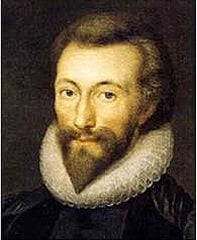
Billy Collins said that every poem is about death and gratitude. Recently I had the privilege of attending a small discussion group examining the works of the English metaphysical poets. John Donne was discussed one night. While reading his famous poem, “Death Be Not Proud,” we discussed the way Donne addresses death. He personifies death and seems to use his traditional Anglican faith to show death to be an insignificant thing – “one short sleepe past, we wake eternally.”

As I looked at the poem, however, it struck me that Donne does not actually seem to be acknowledging his own mortality. He belittles death and says things that one would think appropriate and expected when affirming one’s religious faith. But does he really come to terms with the fact that he indeed will die? How does his recognition of death affect the way he lives his life?

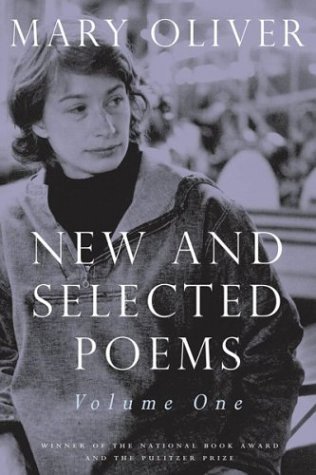
As synchronicity would have it, on the same day we discussed Donne’s poem, one of my blogger friends posted the following poem by Mary Oliver. Perhaps it is due to the times in which each poem was written – Mary Oliver is a contemporary American poet, John Donne a 17th century English poet – but it seems to me that Oliver demonstrates a healthier recognition of death, and a more overt expression of gratitude. Read the two poems for yourself and see what you think. Feel free to disagree or offer a different opinion on the topic.


Death Be Not Proud
By John Donne

Death be not proud, though some have called thee
Mighty and dreadfull, for, thou art not soe,
For, those, whom thou think'st, thou dost overthrow,
Die not, poore death, nor yet canst thou kill mee.
From rest and sleepe, which but thy pictures bee,
Much pleasure, then from thee, much more must flow,
And soonest our best men with thee doe goe,
Rest of their bones, and soules deliverie.
Thou art slave to Fate, Chance, kings, and desperate men,
And dost with poyson, warre, and sicknesse dwell,
And poppie, or charmes can make us sleepe as well,
And better then thy stroake; why swell'st thou then?
One short sleepe past, wee wake eternally,
And death shall be no more; death, thou shalt die.

***


When Death Comes
By Mary Oliver

When death comes
like the hungry bear in autumn
when death comes and takes all the bright coins from his purse
to buy me, and snaps his purse shut;
when death comes
like the measle-pox;
when death comes
like an iceberg between the shoulder blades,
I want to step through the door full of curiosity, wondering;
what is it going to be like, that cottage of darkness?
And therefore I look upon everything
as a brotherhood and a sisterhood,
and I look upon time as no more than an idea,
and I consider eternity as another possibility,
and I think of each life as a flower, as common
as a field daisy, and as singular,
and each name a comfortable music in the mouth
tending as all music does, toward silence,
and each body a lion of courage, and something
precious to the earth.
When it’s over, I want to say: all my life
I was a bride married to amazement.
I was a bridegroom, taking the world into my arms.
When it’s over, I don’t want to wonder
if I have made of my life something particular, and real.
I don’t want to find myself sighing and frightened
or full of argument.
I don’t want to end up simply having visited this world.

*****


*