Sunday, April 10, 2011

Why Love Poetry? Why Does It Matter?

April is poetry month. I had forgotten that fact, but fortunately, I have already begun the month with some tributes to poets and poetry (maybe a subconscious awareness?). In The New York Times Sunday Book Review  David Kirby has written has a very interesting review of  Beautiful and Pointless: A Guide to Modern Poetry, by David Orr. Kirby gives us a great examination of why those of us who love poetry are drawn to it.

Reading this review brought to mind  Dana Gioia’s book of essays, Can Poetry Matter. Gioia’s theme is that poetry has become the province of the academic elite and as a result, the mainstream of society has tragically lost ownership of an art which once belonged to the people.  If you are interested in poetry, I recommend checking out both of these resources.


Monday, April 4, 2011

On Death and Gratitude

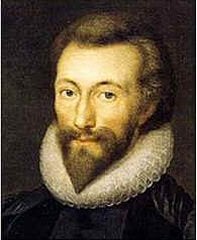
Billy Collins said that every poem is about death and gratitude. Recently I had the privilege of attending a small discussion group examining the works of the English metaphysical poets. John Donne was discussed one night. While reading his famous poem, “Death Be Not Proud,” we discussed the way Donne addresses death. He personifies death and seems to use his traditional Anglican faith to show death to be an insignificant thing – “one short sleepe past, we wake eternally.”

As I looked at the poem, however, it struck me that Donne does not actually seem to be acknowledging his own mortality. He belittles death and says things that one would think appropriate and expected when affirming one’s religious faith. But does he really come to terms with the fact that he indeed will die? How does his recognition of death affect the way he lives his life?

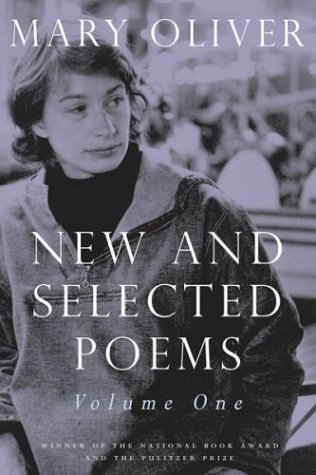
As synchronicity would have it, on the same day we discussed Donne’s poem, one of my blogger friends posted the following poem by Mary Oliver. Perhaps it is due to the times in which each poem was written – Mary Oliver is a contemporary American poet, John Donne a 17th century English poet – but it seems to me that Oliver demonstrates a healthier recognition of death, and a more overt expression of gratitude. Read the two poems for yourself and see what you think. Feel free to disagree or offer a different opinion on the topic.


Death Be Not Proud
By John Donne

Death be not proud, though some have called thee
Mighty and dreadfull, for, thou art not soe,
For, those, whom thou think'st, thou dost overthrow,
Die not, poore death, nor yet canst thou kill mee.
From rest and sleepe, which but thy pictures bee,
Much pleasure, then from thee, much more must flow,
And soonest our best men with thee doe goe,
Rest of their bones, and soules deliverie.
Thou art slave to Fate, Chance, kings, and desperate men,
And dost with poyson, warre, and sicknesse dwell,
And poppie, or charmes can make us sleepe as well,
And better then thy stroake; why swell'st thou then?
One short sleepe past, wee wake eternally,
And death shall be no more; death, thou shalt die.

***


When Death Comes
By Mary Oliver

When death comes
like the hungry bear in autumn
when death comes and takes all the bright coins from his purse
to buy me, and snaps his purse shut;
when death comes
like the measle-pox;
when death comes
like an iceberg between the shoulder blades,
I want to step through the door full of curiosity, wondering;
what is it going to be like, that cottage of darkness?
And therefore I look upon everything
as a brotherhood and a sisterhood,
and I look upon time as no more than an idea,
and I consider eternity as another possibility,
and I think of each life as a flower, as common
as a field daisy, and as singular,
and each name a comfortable music in the mouth
tending as all music does, toward silence,
and each body a lion of courage, and something
precious to the earth.
When it’s over, I want to say: all my life
I was a bride married to amazement.
I was a bridegroom, taking the world into my arms.
When it’s over, I don’t want to wonder
if I have made of my life something particular, and real.
I don’t want to find myself sighing and frightened
or full of argument.
I don’t want to end up simply having visited this world.

*****


*

Saturday, April 2, 2011

On Poetry, Prayer, and Gratitude

I mentioned in one of my past blog entries that my own experiences of mystery and wonder led me first to poetry then to theology, and later back to poetry. I think poetry is a more primary response. Theology, like philosophy and psychology are secondary responses in that they require categories, definitions, rules, and analyses. Billy Collins, U.S. poet laureate from 2001 to 2003, says that every poem is about death and gratitude. The awareness of death heightens the beauty of the world as we see it. As one who attempts to write poetry, I heartily agree with that notion. Poetry conveys that sense of awareness and gratitude.

I consider poetry to be an open canon of scripture, one that is still being written every day, but that’s just me. You have your own canon of scripture, I’m sure. Maybe you are like John Muir who saw “the scripture of nature” and marveled in the presence of nature and its author. Perhaps music is your doorway to the divine.

I must also consider the great souls, such as Dorothy Day and Mother Teresa, who made service to others their witness of God’s presence on the world. Jim Wallis (Sojourners, Washington, D.C.) and Birmingham’s own Jim Douglass (Mary’s Catholic Worker House, Ensley) are examples of people who bear witness to the divine by way of social activism. I believe the mystery of God is conveyed through words, beauty, and actions.

So how does prayer fit in? I was in an online blog discussion a while back in which the question was posed, “Is it okay to pray for material things?” That same week another blogger friend was writing about how he had been influenced by encounters with different faith expressions and wanted to know what others had experienced. Both of those discussions prompted me to take a look at my own attitude toward prayer and faith.

Certainly one’s concept of God will affect that person’s understanding of prayer. I am one who is enlivened by the contact with many faith expressions that we are seeing more and more as our society becomes more pluralistic. I grew up Baptist in a rural, provincial setting and that was enough for awhile. Later, I came to enjoy worship in the liturgical settings of the Episcopal and Roman Catholic churches. It was like learning a new language for worship. As with any new language, new insights arise in the learning. I have also benefitted in personal devotions by reading the works of Quakers (e.g. John Woolman, Rufus Jones, Elton Trueblood), Catholics (e.g. Thomas Merton, Thomas Keating, and Basil Pennington) as well as Buddhist practitioners (e.g. Jack Kornfield, Thich Nhat Hanh, and His Holiness the Dalai Lama)

To me, gratitude is the most enriching kind of prayer. It immediately assumes a relationship with the divine and a trust even in uncertainty. Throughout my pilgrimage, my image of God has certainly changed, but I have never lost that sense of gratitude toward a loving ultimate force behind an ultimately friendly universe. This brings me back to Billy Collins’ statement about poetry: every poem is about death and gratitude. Every prayer, every poem, every offering of service we can make is undergirded by the awareness of our own mortality and by our gratitude for the wonder of existence.


*